DOWNLOAD MEDIA KIT

New Collection 2026
“meeting horizons”
Rooted in Eastern thought and the quiet wisdom of traditional craftsmanship, yet always with its gaze turned toward what has yet to take shape, design at Time & Style is not just about form. It is an evolving dialogue between heritage and possibility.
Japan rests at the far edge of Asia, surrounded by the open sea. For centuries, ideas have arrived from cultures on distant shores. But rather than simply absorbing them, Japan allowed these currents to settle and breathe alongside what had long existed. Through the land, the climate, the light, the seasons, and the workings of nature, these influences were gently transformed. From these encounters, something singular emerged.
Stretching three thousand kilometers from north to south, Japan is not one landscape but many: snow fields and warm coasts, deep forests and open plains, different waters, different soils, different winds. From these diverse regions, distinct crafts are born, each shaped by what is close at hand. Every tradition grows from its own ground. Each speaks with its own unique voice.
In a world that often pursues sameness, these local cultures hew close to their roots. They belong to a particular place. They move to natural rhythms rather than the pace of the global market. Their value is organic, not imposed.
For more than thirty years, Time & Style has listened to these voices—not trying to make them uniform, but bringing them together as one might compose music. Each tone remains clear, while also part of a shared harmony.
With roots reaching deep into the soil of traditional crafts, we study materials with meticulous care and honor techniques shaped by time and human hands. From these roots, our collections extend outward like branches toward light. Guided by Eastern philosophy while open to Western ways of living, we seek a balance that is never static. It is alive. It shifts. It is rediscovered again and again.
At this year’s Milan Design Week, Time & Style presents a new chapter in this journey. Together with international designers including Kensaku Oshiro, Drill Design, OEO Studio, Imagebook, Yumi Terauchi, and Wohl Hütte, we continue our exploration across cultures and across distances.
Crafted from the finest materials and realized through masterful artisanship, our new collection brings diverse sensibilities into refined equilibrium. It proposes a way of living in which horizons do not divide but meet—where distant shores recognize one another, and a shared language continues to unfold, like a path extending toward the sea.
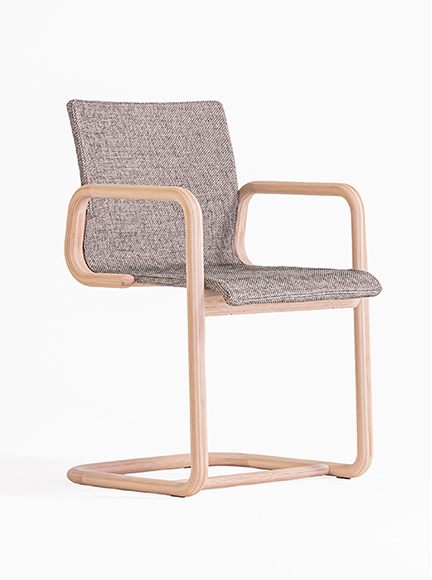
The upholstered cantilever chair
Utilizing the same molded plywood frame as the plywood seated cantilever chair, this version features a seat and back shell padded with urethane foam and upholstered in fabric or leather.
The natural flexibility of the wood is augmented with cushioning, creating a more enveloping sitting experience. The gentle flow unique to the cantilever structure forms a harmonious balance with the suitably firm support, ensuring comfort even during extended use.
Upholstery provides a gentle contrast with the wooden frame, adding depth and visual rhythm. While retaining its structural clarity, this model expands the cantilever chair’s adaptability, offering affinity with a wide range of interiors.
The plywood seated cantilever chair
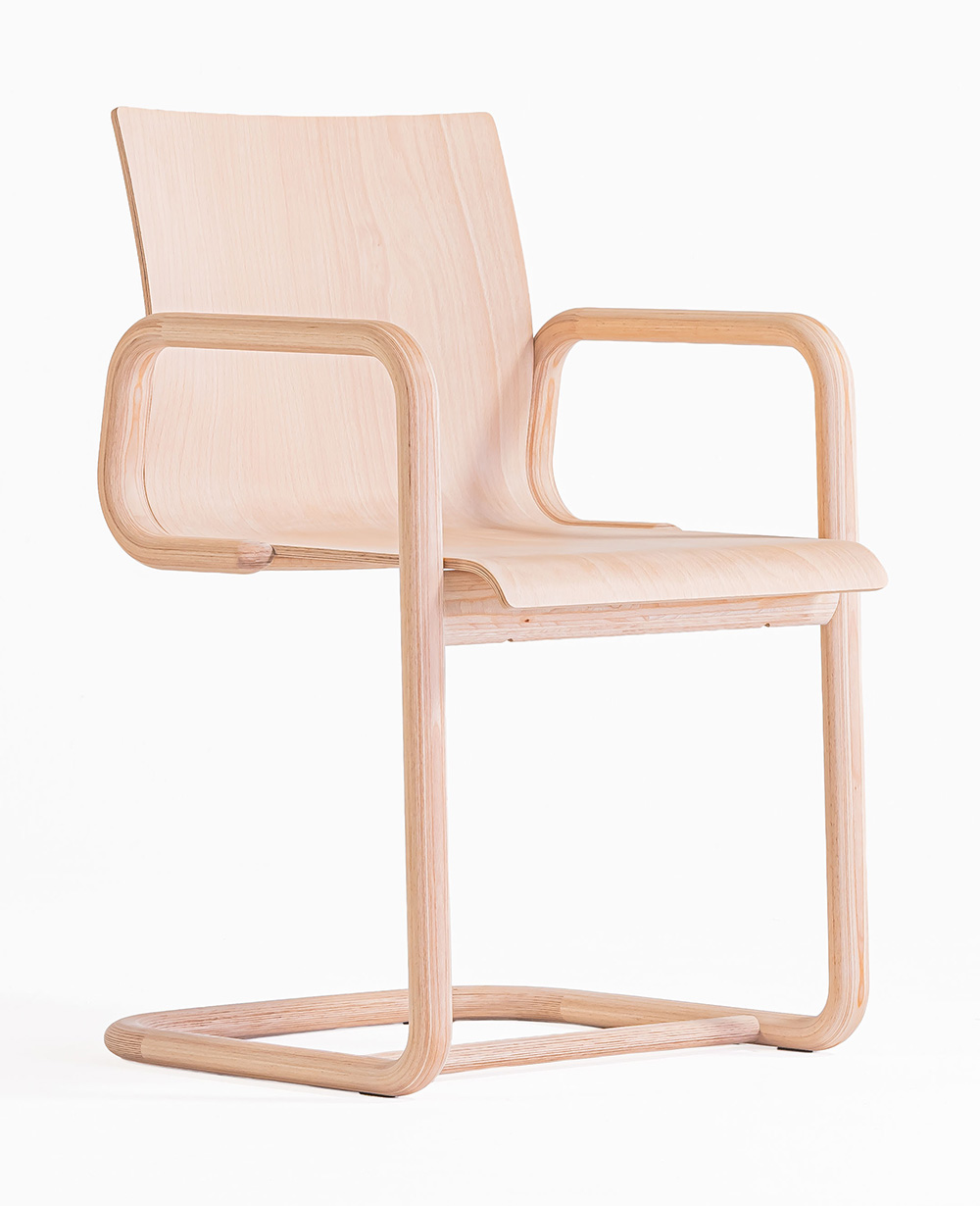
This armchair retains the Bauhaus-inspired molded plywood cantilever frame of the wooden cantilever chair, now paired with a one-piece wooden shell for the seat and back, formed using the same molded plywood technology.
The wooden shell extends naturally from the frame, creating a seamless composition that highlights the structure’s restrained beauty. Gently curved to follow the body’s contours, it draws on the natural flexibility of molded plywood to provide comfort with a minimal design.
By forgoing ornamentation, emphasis is placed on the wood’s texture and the continuity of the structure. Frame and shell read as a single, quiet gesture—an expression of warmth and strength in their most distilled form.
The woven cantilever chair
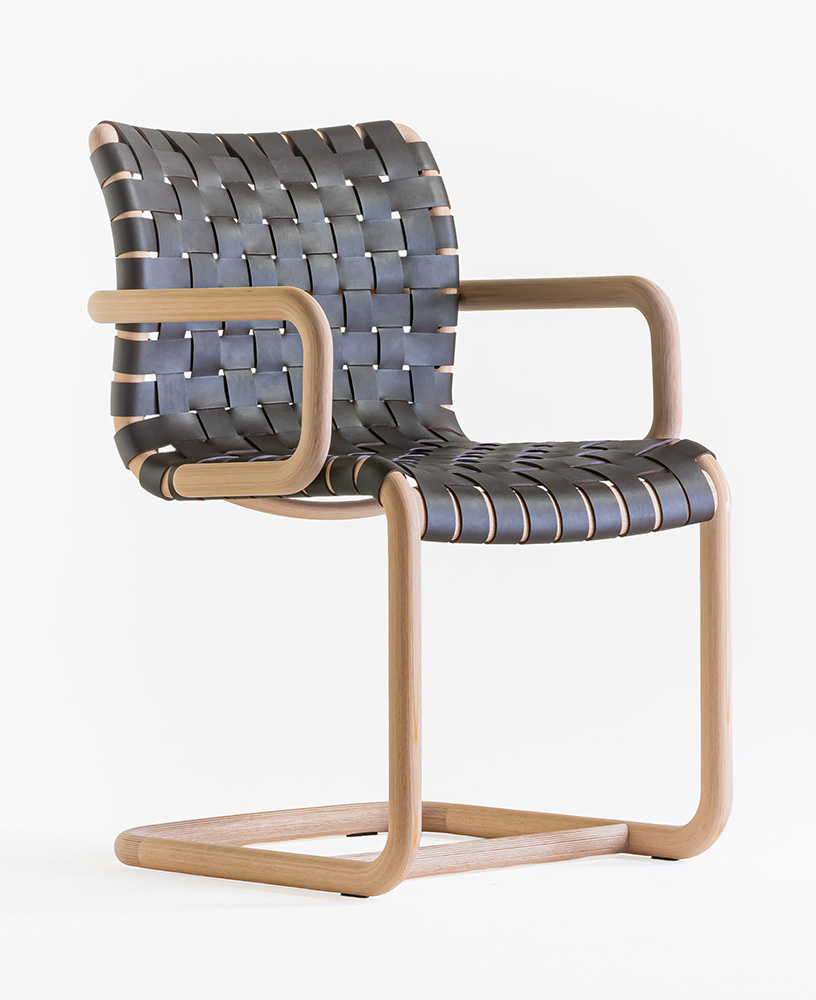
Developed through an exploration of the expressive potential of materials and structure, this Bauhaus-inspired cantilever chair is crafted using molded plywood technology. The seat and backrest are woven from natural leather straps.
Molded plywood allows fluid, elegant curves while preserving structural integrity. Its gentle flexibility responds naturally to movement, offering a light and comfortable seating experience.
Each leather strap is individually woven, bringing elasticity and softness into dialogue with the body. The frame, carved into a smooth oval profile, has a warm and tactile presence.
Over time, the leather develops a rich patina and matures alongside the wood, deepening the character of the piece.
Yoshino Breath Armchair
Cedar and cypress have long played a prominent role in Japanese culture. From architecture and sake brewing to everyday objects, wood has always been an integral part of daily life, and people have traditionally chosen trees of a particular age and specific parts of the wood according to their intended purpose, using each piece fully and without waste. In the Yoshino region of Nara Prefecture, forests have been planted and nurtured for over 500 years, always with care for the trees spanning a century or more in mind—a practice of human-guided forestry that continues today as both philosophy and craft.
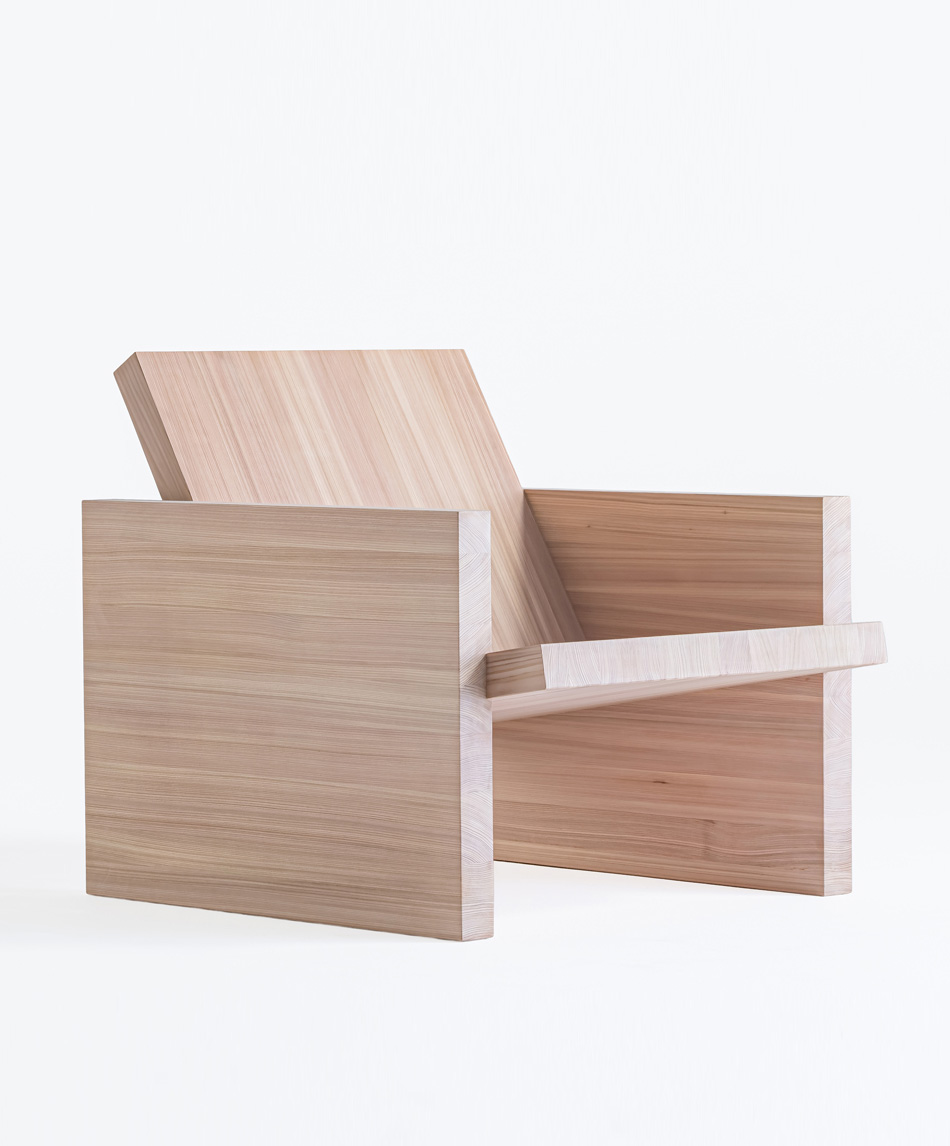
This lounge chair is born from Yoshino-grown cedar. We selected red straight-grain wood with the dense, uniform grain found near the tree’s core, which combines exceptional beauty with strength, and cut it into thick, sturdy boards. Cedar’s cellular structure contains numerous air layers, making the wood strong yet supple, soft to the touch, warm and remarkably light. Its subtle fragrance and gentle tactility can be savored with the whole body.
The chair is assembled without metal fittings, employing traditional joinery techniques such as yatoi-hozo and oire-tsugi. Respect for the wood’s natural properties and the avoidance of unnecessary elements serve to highlight the inherent presence and beauty of the material.
To allow the cedar’s elegance to speak for itself, the chair is designed in a simple cubic form. Straight lines give it a solid, grounded presence, while the natural softness and lightness of the wood create a gentle, cheerful impression. The chair blends effortlessly into both Japanese and Western interiors, offering a serene and inviting place to sit. Carefully crafted by Yoshino artisans in a spirit of honoring the materials they select, this lounge chair quietly conveys the enduring beauty and quality of the wood itself.
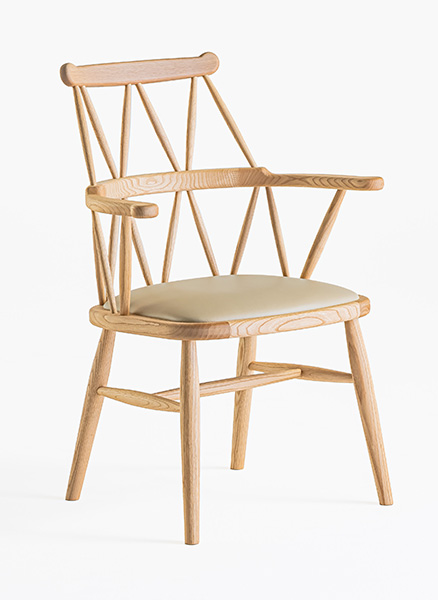
Truss back chair
By DRILL DESIGN
The Windsor chair, first developed in 17th-century England, spread worldwide in numerous variations. The oldest known among them, the comb-back Windsor, with parallel spindles rising from a horizontal crest rail, has inspired generations of reinterpretation.
Our Truss-Back Chair reimagines this archetype for a three-dimensional seating experience.
Its defining feature is the diagonally arranged spindles, extending above and below the arm line at varying lengths. Set at intersecting angles, they create a sculptural, enveloping back that follows the body’s contours.
The triangular truss configuration adds rigidity while preserving lightness. Crafted in Japanese chestnut, the chair combines strength with a delicate weight. The refined grain and rich coloration of the wood give the piece a uniquely expressive quality.
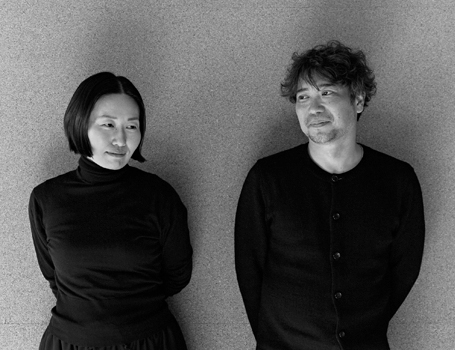
DRILL DESIGN started in 2001 by Yusuke Hayashi and Yoko Yasunishi in Tokyo, Japan. The studio is providing individualized solutions and concepts to clients and society with flexible creations between product and graphic design. The studio has developed several brands for its clients and launched them to the world.
With partners in Japan, who have original techniques while using high quality materials, Drill Design has a valuable network of knowledgable professionals. The studio also offers designs for companies like Muji, Canon, Mercedes, Camper, etc… Drill Design has exhibited its work in Tokyo, Singapore, Milan, Paris and Stockholm. They have been awarded with many national and international renowned awards such as the Red Dot Design Award, German Design Award, The Good Design Award in Japan, The Design For Asia Award and The Wallpaper* Design Award.
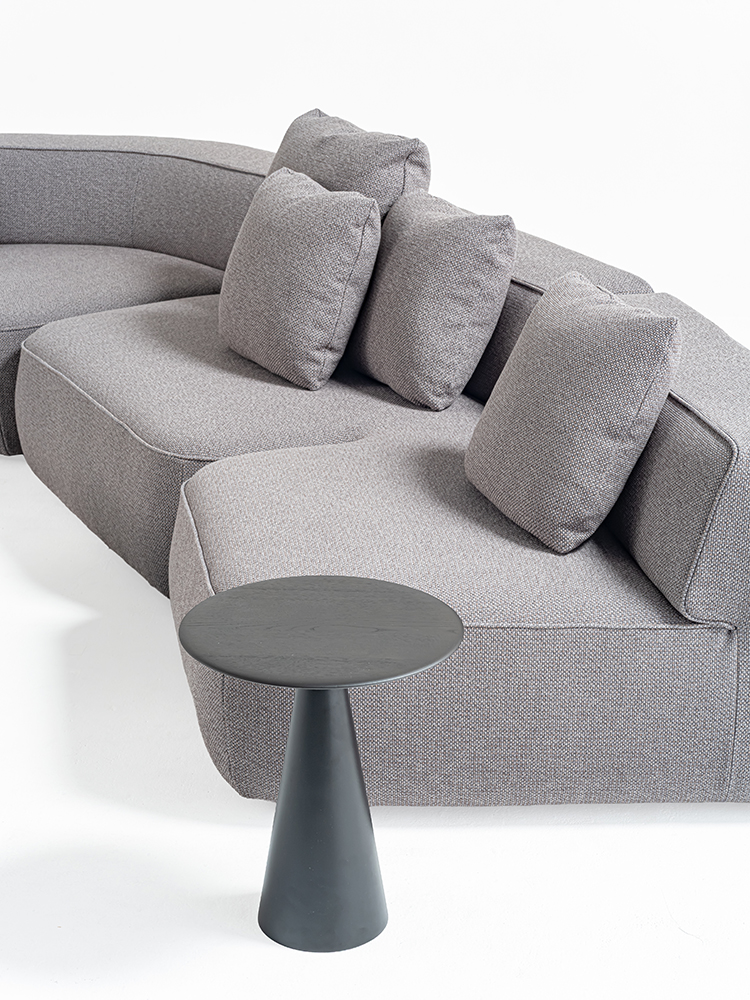
Pentagon
A sofa collection born from exploration of the intriguing geometry of the pentagon, with its shape of ambiguous regularity. Unlike symmetrical polygons such as hexagons or octagons, the pentagon implies a sense of direction while remaining elusive, giving it a distinctive presence. It is precisely this ambiguity and freedom that suggest new possibilities of form.
Inspired by the placement principles of the stepping stones and paving stones found in Japanese gardens, Pentagon translates that sensibility into a pentagonal sofa system. Rather than prescribing movement or use, it leaves room for personal interpretation, enabling arrangements that adapt naturally to the user’s instincts.
As a modular unit, the pentagon is neither square nor round, and its independence allows for relaxed, unforced compositions. The way the modules are positioned and spaced subtly shapes conversation, sightlines, and comfort—there is no “correct” layout. A single unit becomes an intimate place of its own; joined together, the modules create gentle connections, while putting space between them introduces a comfortable sense of openness. Like stepping stones, the collection encourages natural movement without imposing on distance or behavior.
Pentagon is a sofa collection designed to embody that same quiet, unobtrusive presence.
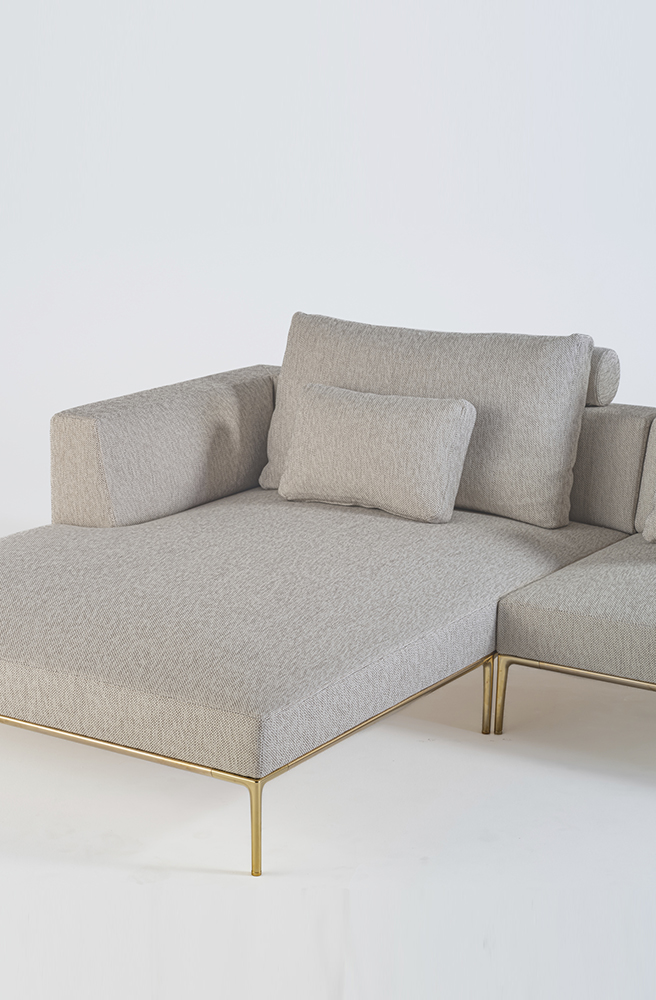
Double concerto sofa
The Double concerto sofa adds newly designed high-back cushions and bolster cushions to the Concerto sonata design. The generously proportioned cushions accent the refinement of the piece, enhancing its mood of understated elegance.
The cushion filling combines feathers and urethane, carefully balanced to provide seating that gently envelops the body and remains comfortable even over long periods. The bolster cushion weight is crafted from solid oak, a natural material that enriches the depth and character of the back profile.
Together, the elements of the sofa perform in harmony, as if engaged in quiet dialogue, composing an image of sophistication and tranquility.
Treves
By Kensaku Oshiro
Rapidly evolving technology is reshaping how we live and communicate. Even the traditional living room, long centered around the television, is being reconsidered. Against this backdrop, Treves explores new forms of gathering, where natural conversation can flourish.
Inspired by ideas of asymmetry and imperfection, and the Japanese notion of ma (“the space between”), the sofa collection embraces irregularity as a source of freedom and new values. Each module features a soft, rounded form with carefully placed slits. Slight variations in angle and shape allow the modules to nest together harmoniously, expanding possibilities for seating orientation, posture, and interaction.
Configurations can create a chaise lounge, encourage dialogue, or subtly divide a space. Treves proposes a new way to gather—connecting people comfortably, where presence, distance and atmosphere extend beyond words.
Stone Garden sofa
The Stone Garden sofa is a backrest sofa that embodies the philosophy of the Stone Garden collection.
The proportions of the newly introduced backrest have been carefully designed so as not to disturb the horizontal orientation that defines traditional Japanese space. Set at a height averaging more than 100 mm lower than those of our standard sofas, the backrest stands out as one of the product’s most distinctive features.
To ensure structural integrity, the sofa has been reimagined with a wooden-frame core. Upon this foundation, layers of urethane and feather are balanced to recreate the soft, enveloping comfort and subtle resilience that are intrinsic to Stone Garden.
This piece reveals its full character when paired with futon mattresses or tatami. By introducing the spatial principles inherent in tatami modules as a new layer in contemporary architectural space, it creates living areas that feel at once grounded, open, and expansive.
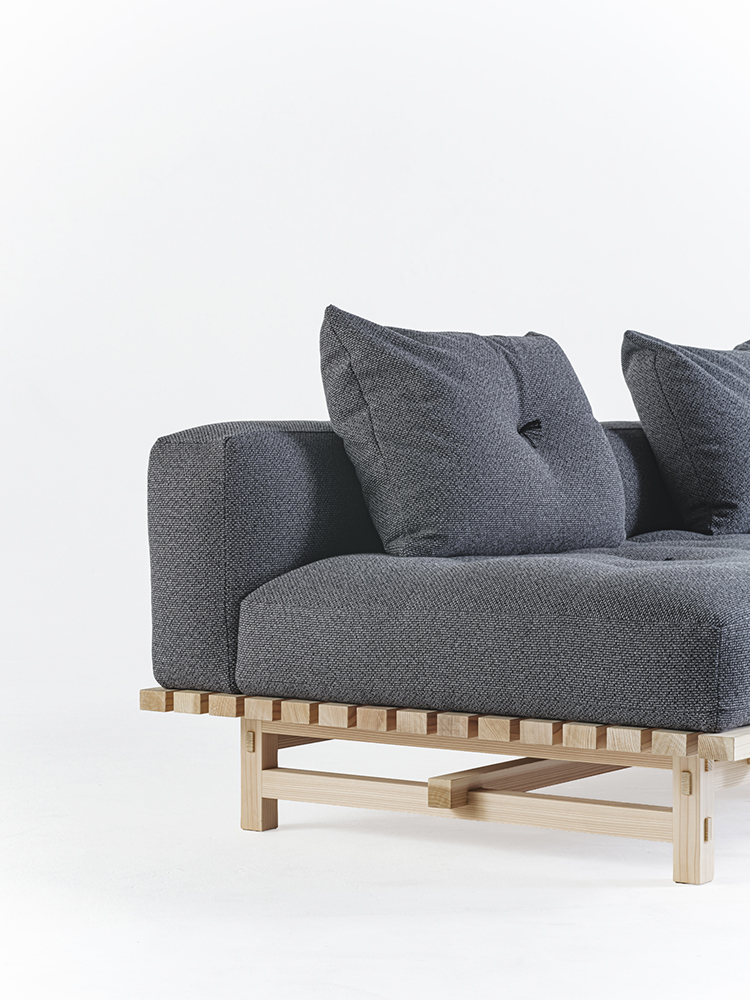
The mountains of the floating layer
“The mountains of the floating layer” introduces a gently undulating topography to the space it occupies.
Building on the philosophy of “The horizon of the floating layer,” the piece is conceived as a high-back seating system designed for more complete support of the body.
While retaining the horizontally extended base and a wooden frame that lifts lightly from the floor, the back cushions are redefined in both height and volume. The elevated backrest provides seamless body support from the back through the shoulders to the head, creating a more immersive seating experience.
This high-back configuration ensures not only physical comfort, but also relaxation of the mind. As a new addition to the floating-layer landscape, “The mountain of the floating layer” brings a profound sense of ease and composure to the sitting experience.
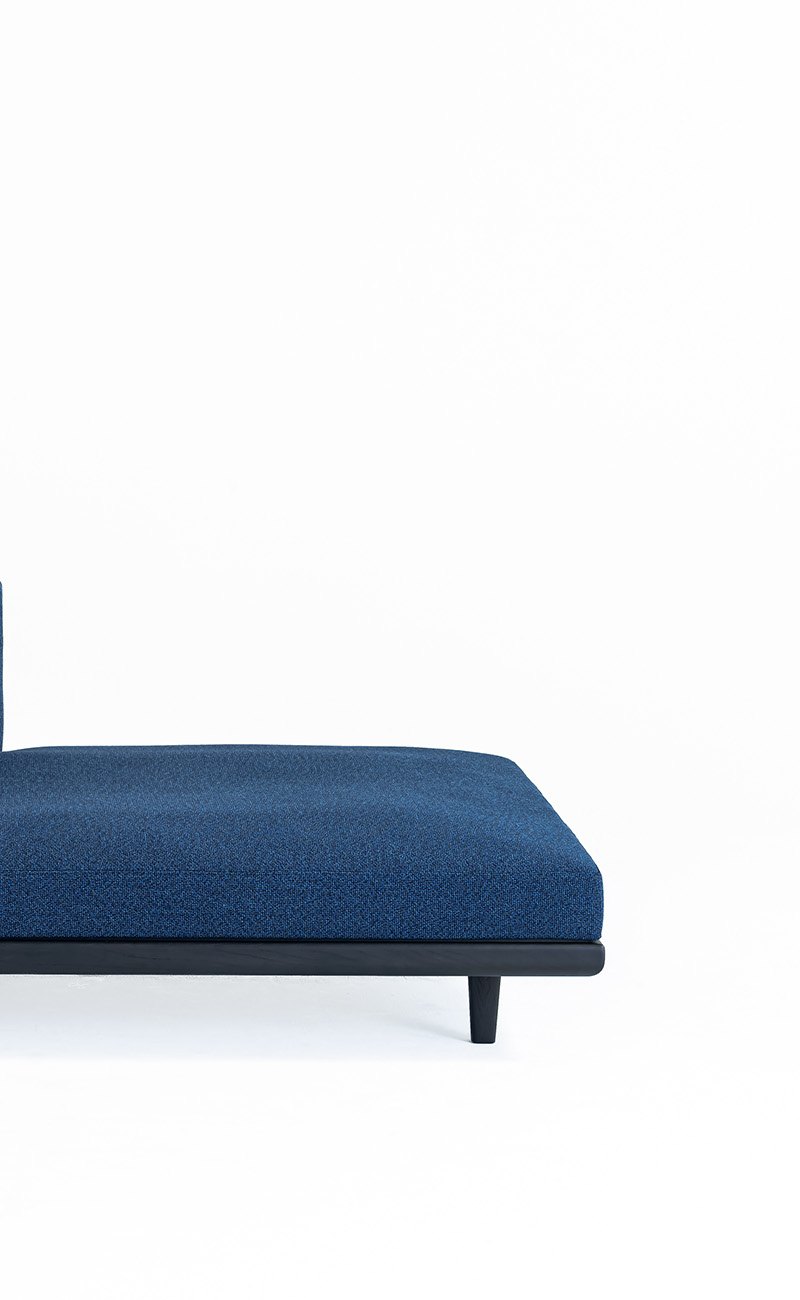
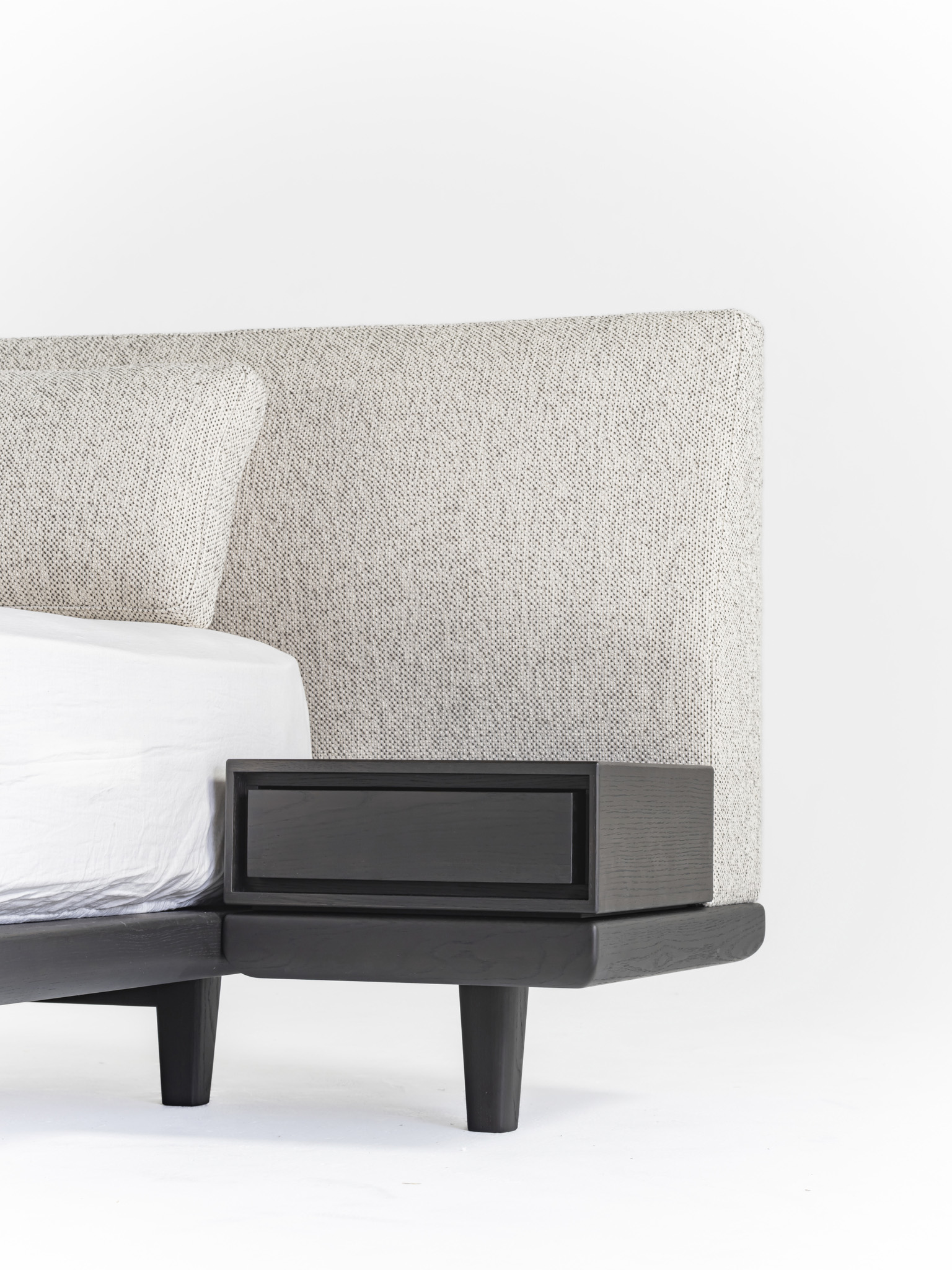
The horizon of the floating layer bed
The development of this product began with a simple question: could the philosophy behind The horizon of the floating layer sofa be applied to create a bed grounded in the same concept?
A flat space of quietly expansive proportions, reminiscent of the horizon… From the very beginning, the sofa was conceived as a place not only for sitting, but where the body could also recline and rest. The creation of a bed variation was a natural and inevitable extension of this idea.
A lightly floating, carved wooden frame is paired with an upholstered headboard and back cushions that provide soft support. Beneath the mattress, a slatted base structure ensures breathability and lasting comfort.
To enhance time spent on the mattress, the headboard is set higher than the back of the original sofa, ensuring full support of the body by the cushions. It is designed to accommodate moments of reading and relaxation, gently guiding the transition from rest into sleep.
By reexamining the role of the bed itself, every aspect—structure, proportions, and cushioning—has been carefully designed to support not only sleep, but also the peaceful moments that lead into it.
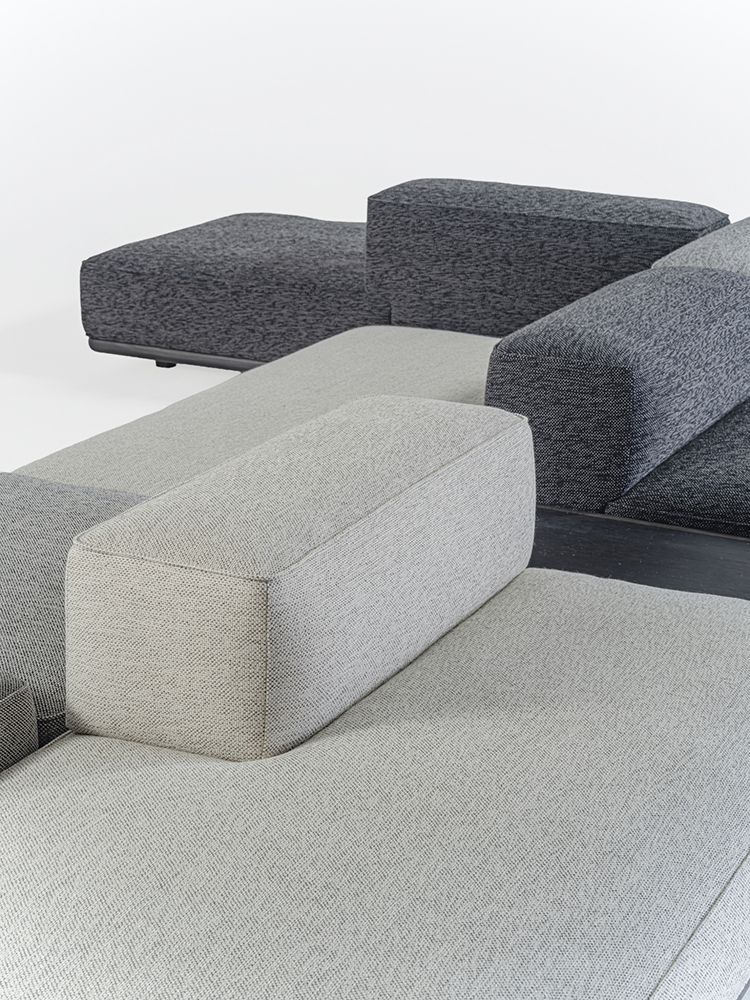
Landscape seating elements
The Japanese have long revered nature and sought to live in harmony with it. Inspired by this worldview, Landscape seating elements are designed to form modular sofas that shape living spaces combining units of varying volumes, abstractly evoking majestic mountain landscapes and open plains.
Based on a simple 950 mm module, the system includes backrest seats, ottomans, and armrests, supporting both conventional arrangements and more open layouts approachable from any angle.
Variations in height and rhythm resonate with surrounding spaces and views beyond the window, gently weaving relationships between people and their environment.
Feather-filled seats ensure soft, enveloping comfort, while tapered solid wood legs lift the elements lightly from the floor, creating a sense of elevation and offering new places to inhabit within a horizontally expanding landscape.
Cone table
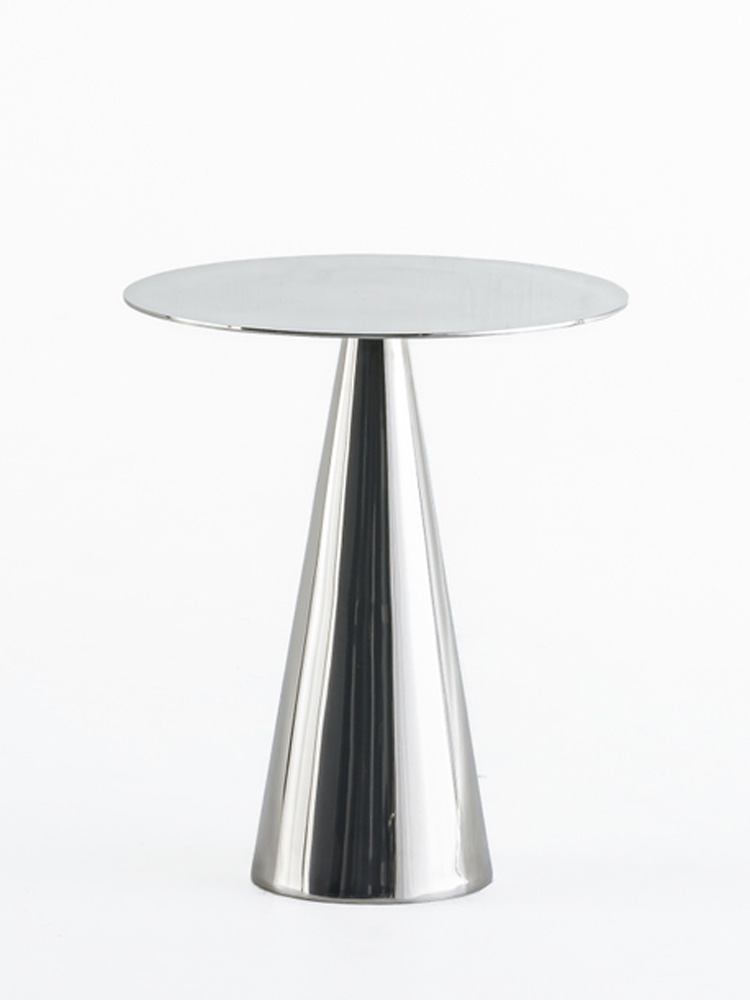
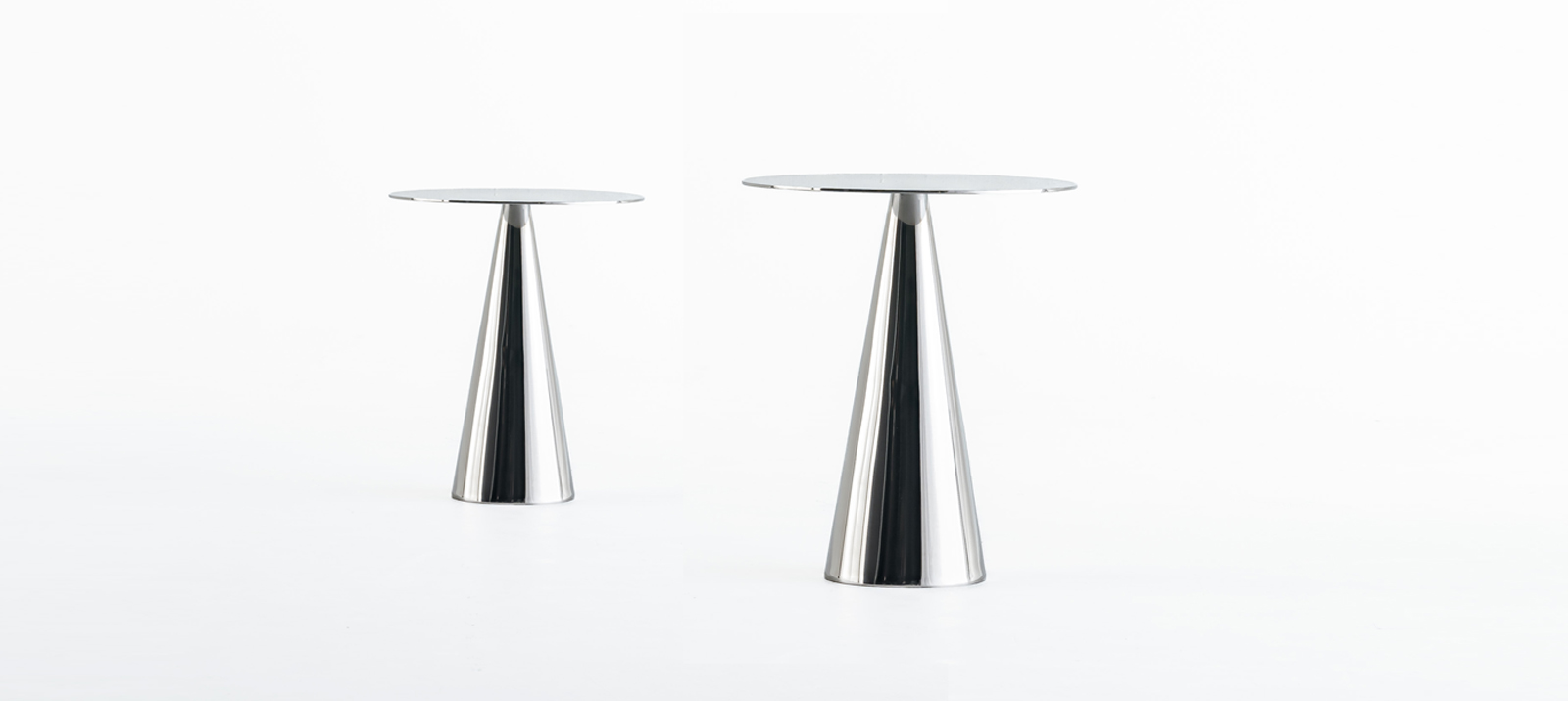
This product unites design and structure as a single concept, with each element thoughtfully distilled to its essence.
The conical legs, shaped from stainless steel sheets through tapered rolling, form the structural core, creating a composition in which form and function flow seamlessly together.
The design extends across a versatile range—including café tables, low tables, and side tables—while preserving consistent proportions and a cohesive design philosophy. For the stainless steel top versions, a powder-coated satin finish ensures durability and weather resistance, allowing the table to perform comfortably in outdoor environments.
Soe
Design by Wohl Hütte
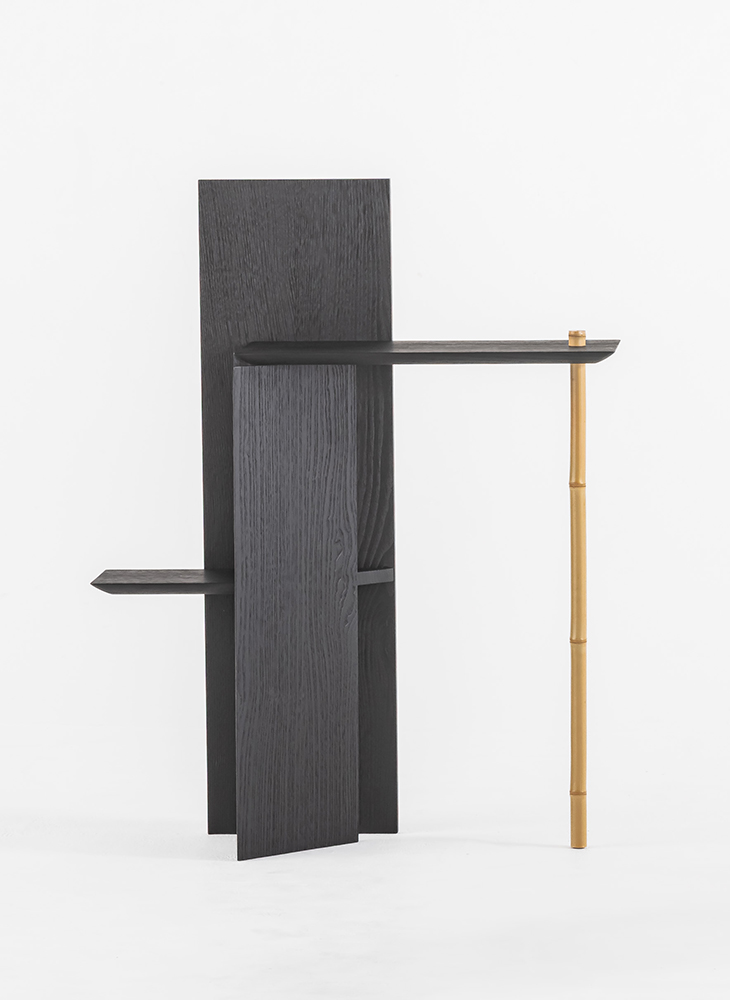
Our reinterpretation of chigaidana, the staggered shelves of traditional tokonoma alcoves, scaled down for contemporary living.
Framing both objects and their environment, the piece welcomes vessels, flowers, books, and more without prescribing a function, blending organically into everyday settings—beside a sofa, in the living room, or at the bedside— quietly responding and giving gentle prominence to what it holds and the space around it.
The composition is reduced to essentials, focusing on planes, lines, shadows, and subtly shifting angles, with expressions changing through light and perspective.
Crafted from Japanese chestnut with straight-grain timber, the surface is brushed to highlight its natural texture; delicate gradations emerge with light, allowing material presence even on a compact scale.
All components disassemble easily, making the shelf portable and adaptable to any space.
Wohl Hütte
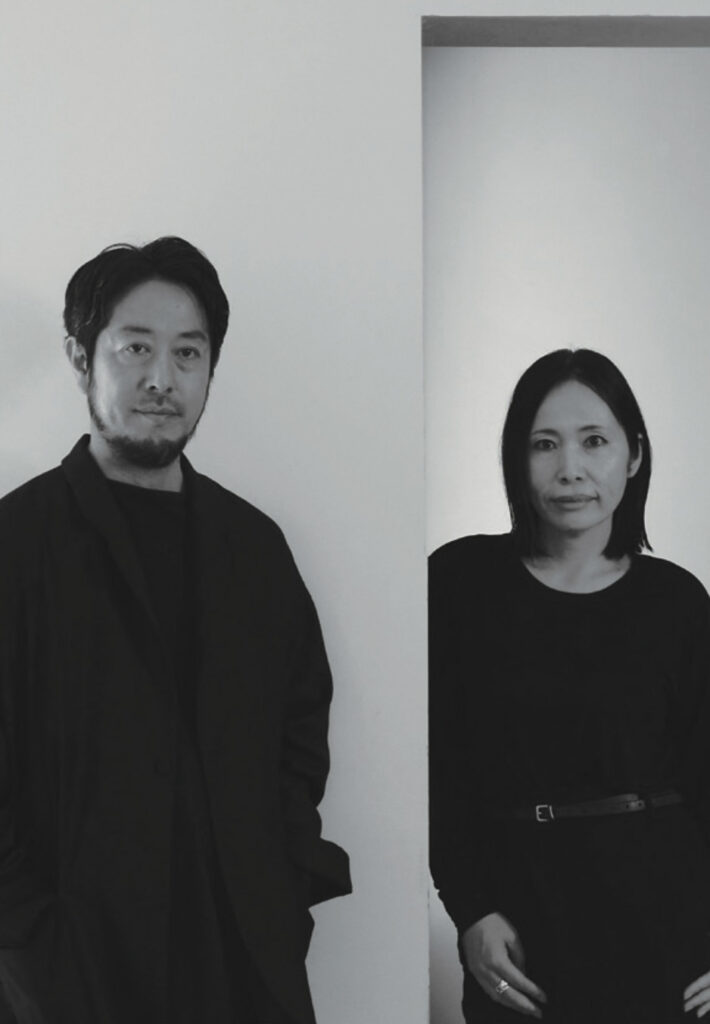
Wohl Hütte was founded in 2006 by Yoshiyuki and Junko Horibe and is based in Gifu Prefecture, Japan.
The studio creates works that combine lasting functionality and refined design with elements that speak to human sensibility. Valuing the relationship between user and space, they oversee the entire process from design to production, and in recent years have presented Japanese-made furniture internationally.
With backgrounds in woodworking and metal engraving, the founders approach each project from both material and spatial perspectives, combining different materials to achieve rich texture and depth. Centered on wooden furniture, their work extends to kitchens and spatial design.
Respecting traditional techniques, materials, and the natural environment, Wohl Hütte reinterprets them in a contemporary context, creating craftsmanship that connects present and future with enduring richness.
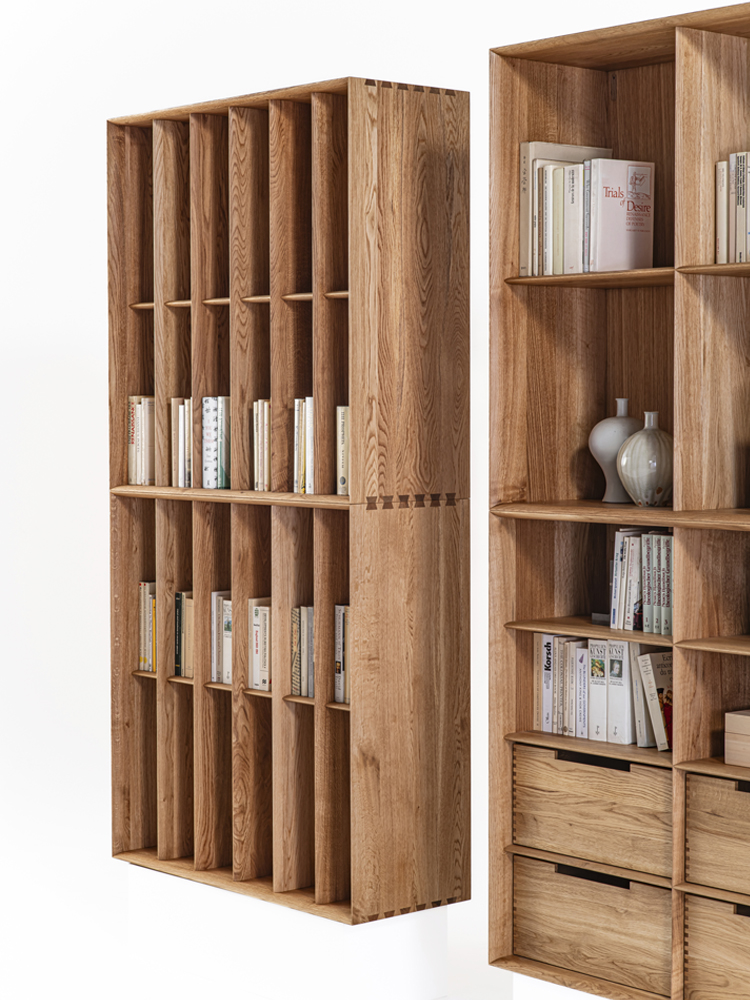
Grid Composition
Shaped by the harmony of solid wood and structure, Grid Composition consists of independent units that may stand alone or be mounted in a floating arrangement. Combined along a wall, they bring both visual elegance and functionality to the space.
Crafted entirely from solid wood with traditional dovetail joinery (ari-tsugi), the construction itself becomes a defining design element, giving the piece a presence of quiet, composed integrity. Though made from solid timber, the frames and edges remain thin and delicate, emphasizing rhythm and shading of the structure.
Drawers, doors, and open shelves function independently, yet together form a layered grid that introduces depth and visual intrest. More than mere storage, Grid Composition embodies architectural thinking, adapting naturally to different uses and environments.
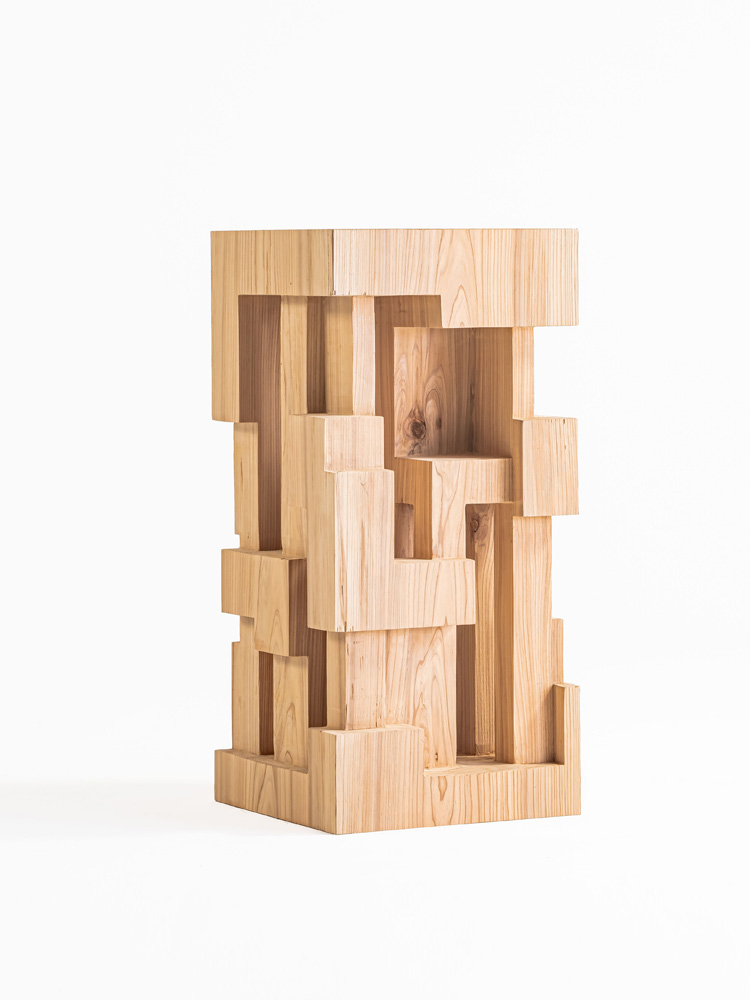
Pillars of Memory
In historical Japan, daily life—architecture, tools, and crafts—was rooted in natural materials shaped by local climates and the hands of skilled artisans. Planned forestry ensured resources for the future, sustaining a cycle of coexistence. Yet over the last century, industrialization has favored mass-produced metals and plastics, leading to the decline of traditional construction and craft practices. Cedar and zelkova trees once cultivated for generations now struggle to find purpose.
Pillars of Memory are crafted from these timbers using classical techniques such as kizami carvings and tsugite joints. These elements are not merely decorative; they express respect for a culture of craftsmanship deeply connected to nature. Through the presence of monumental wood, the works explore new possibilities for material use and invite reflection on the values and spirit inherited from the past.
Vista frame shelf
The Vista frame shelf is an open bookcase that serves as both storage and a frame for the surrounding space. Without a backing panel, the gaze passes through the shelves, allowing the architecture beyond to become part of its composition.
Crafted from solid wood, the shelf is reduced to its essential structure. Vertical and horizontal elements are refined and carefully shaped, with joints connecting in seamless continuity, balancing quiet refinement with structural clarity.
The grid is available in several variations—from evenly proportioned frames to overlapping compositions of varying sizes. Combined, they create layered perspectives instead of a fixed pattern.
More than storage, the shelf frames books, objects, or empty space as individual scenes, revealing a rich variety of expressions with the shifting of light and shadow.

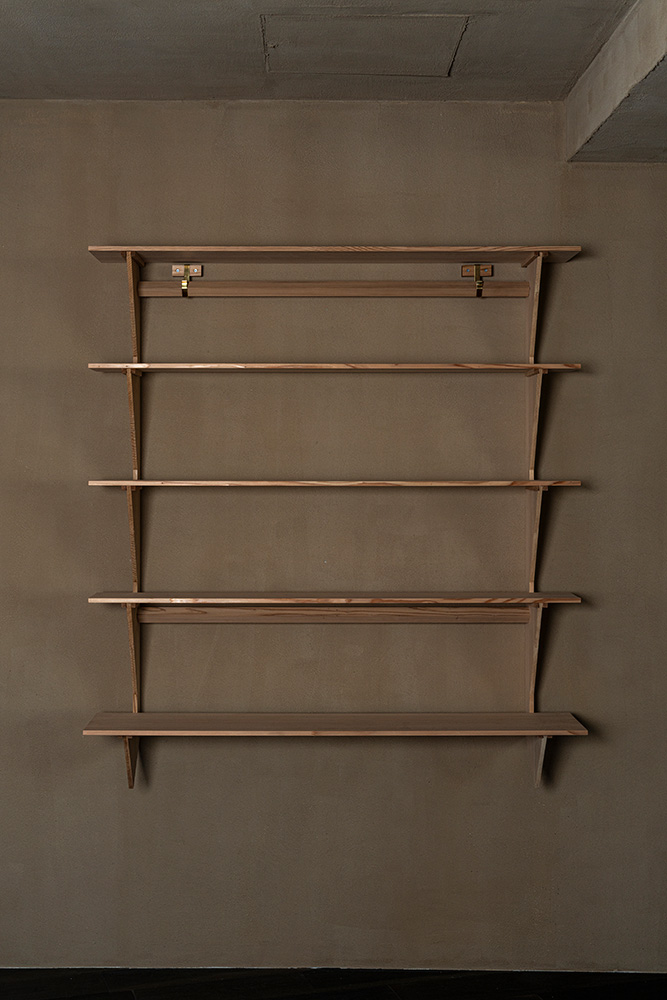
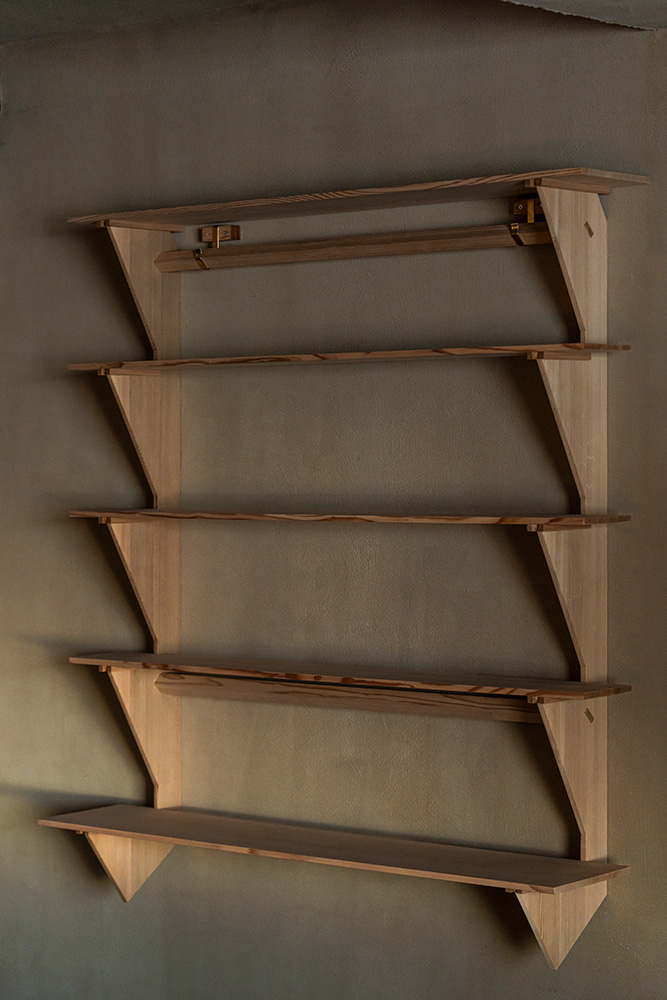
Jizai shelves
Jiyu jizai is a term rooted in Buddhist thought, referring to the ability to move freely according to one’s will, or to act in complete harmony with one’s intention. It also describes the state itself.
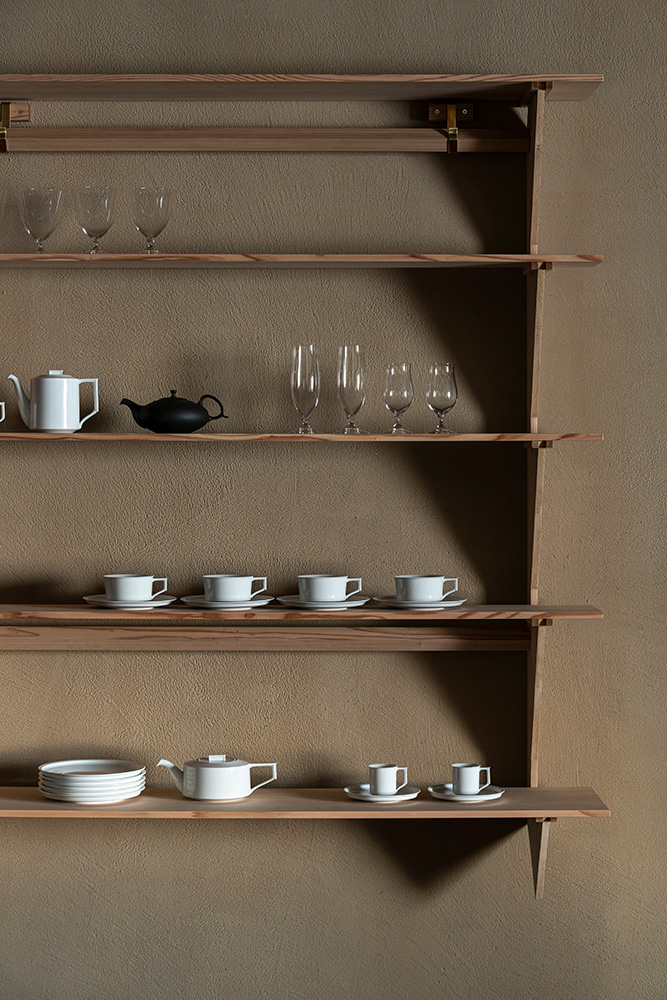
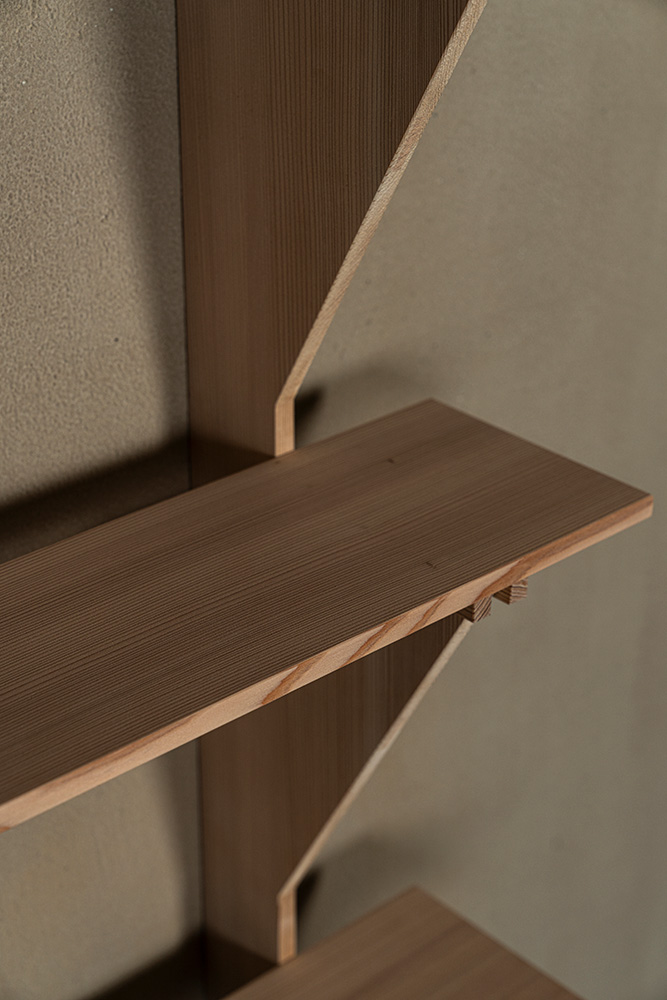
The Jizai shelves can be installed wherever a wall space of sufficient width is available. Lightweight enough to be lifted by a single person, it can be easily relocated or rehung as needed. Both the frame and the shelves are simple to adjust or remove, making maintenance effortless. In the kitchen or dining area, it can serve as open storage for tableware and everyday objects. In the living room, it can display objects and photo frames, while in a study it neatly accommodates books and stationery. It makes use of space without overwhelming it, bringing a sense of clarity and openness to its surroundings. Like a hanging scroll, it can be freely rearranged according to the season, mood, or occasion. Designed for easy assembly and disassembly, it can also be stored away when not in use.
To resist fixing Jizai shelves to a single function or place is, in itself, a way of keeping possibilities open. The shelves are both a tool and a method—an embodiment of freedom that can be seen, touched, and experienced, and a tangible proposition for living with greater flexibility.
Osamu Saruyama
Director of Guillemets Layout Studio, Osamu Saruyama works across a broad spectrum of graphic, product, and spatial design. In addition to providing design direction for ceramic kilns and other production sites throughout Japan, he has engaged in numerous collaborations with artists working in ceramics, metalwork, and related crafts. He also composes and performs musical works for theatre, film, and exhibitions.
Amakakeru
Design by Yumi Terauchi
Like clouds drifting across the sky.
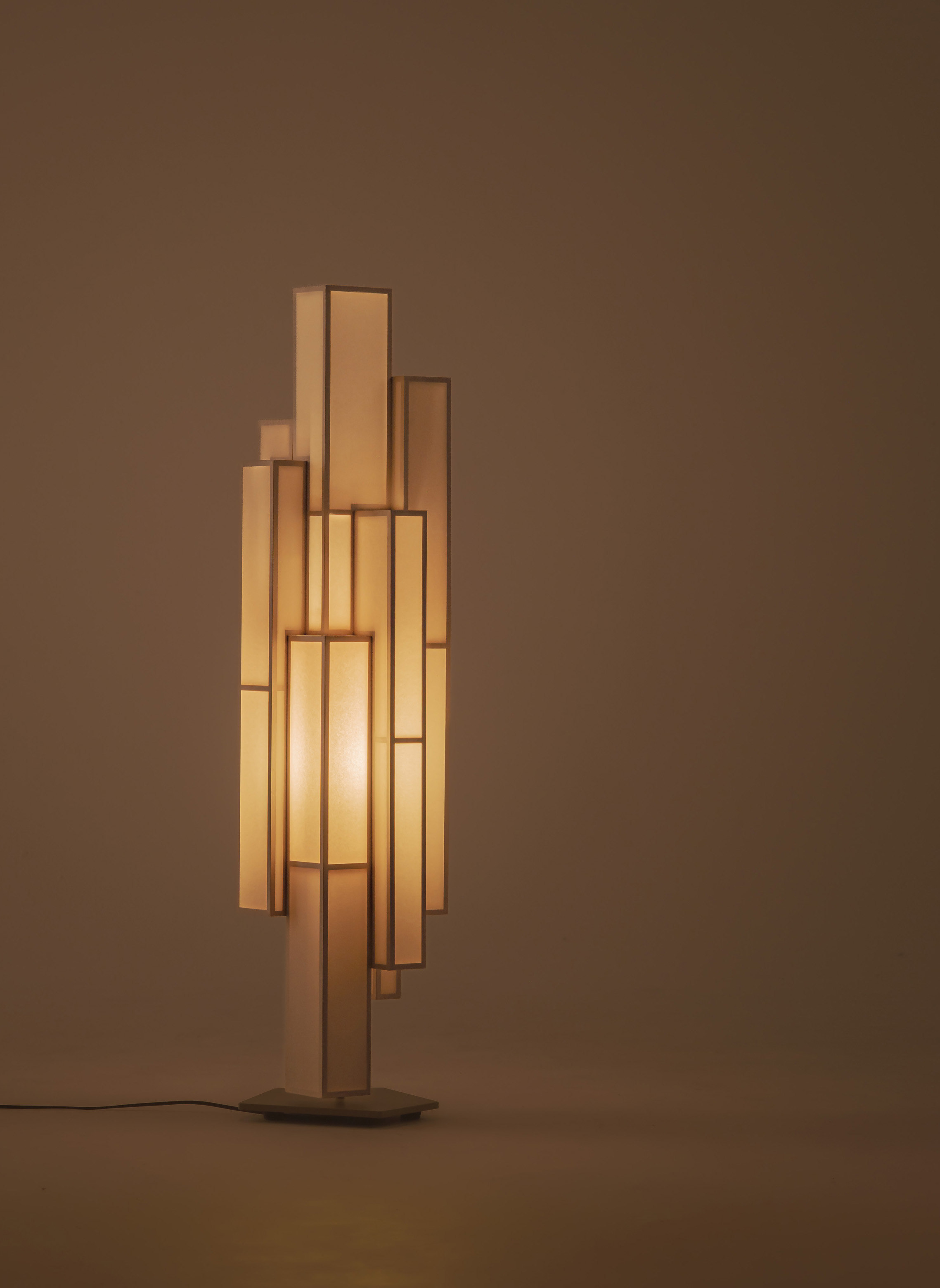
Traditional Japanese joinery meets the soft texture of Mino washi paper. Inspired by slender clouds extending into the heavens, the lamp translates their fleeting beauty into form.
A rectangular frame wrapped in washi is hand-assembled with precise craftmanship, balancing proportion, strength and a quiet elegance born of experimentation.
The asymmetrical shape evokes the lightness of clouds and the freedom of weightlessness, shifting subtly with perspective like the irregular beauty of nature.
When lit, the paper diffuses a gentle, layered glow, casting soft shadows and a serene depth reminiscent of light through shoji screens—an approach that honors the Japanese aesthetic of “harmonizing” a space rather than overpowering it. When unlit, it remains a sculptural presence.
The lamp is available in floor, wall, and pendant versions.

Yumi Terauchi
Creative director / Designer
After working at an interior design office and an interior shop, she established Terauchi Design Office Co., Ltd. in 1998 and has since been active in a variety of fields, including creative direction, products, interior design, and art. She is known for creative work that prioritizes consistency and versatility in establishing a brand’s identity.
She values “capturing an essence, something that is there” and has designed many products that reflect nature, landscapes, and Japanese aesthetic sensibilities. She has won awards both domestically and internationally, including the Good Design Award and the Red Dot Design Award.
In 2022, she published the art book There I Sense Something and won the Grand Prize of the 25th Japan Self-Publishing Culture Award. She is currently expanding her activities in creation and communication, including the opening of Tokiwagi, a gallery in Karatsu City, Saga Prefecture, that showcases the appeal of new crafts.
Cylinder
This cylindrical umbrella stand celebrates the natural elegance of aluminum piping. Stripped of all superfluous ornament, its pure form—a cut pipe joined to a simple base plate—quietly showcases the material’s texture and color.
In addition to the standard single-cylinder version, available in two sizes for both long and folding umbrellas, there is also a variant of seven slender pipes bundled together. This configuration lets each umbrella find its own space, creating a rhythm that is both functional and sculptural. The single-cylinder model can also serve as a waste bin or as storage for other tall items.
Dyed through an anodizing process, the aluminum displays translucent coloring with a gentle sheen. Despite its industrial origin, it exudes a sculptural presence through its simple geometric form.
Ukigumo
By DRILL DESIGN
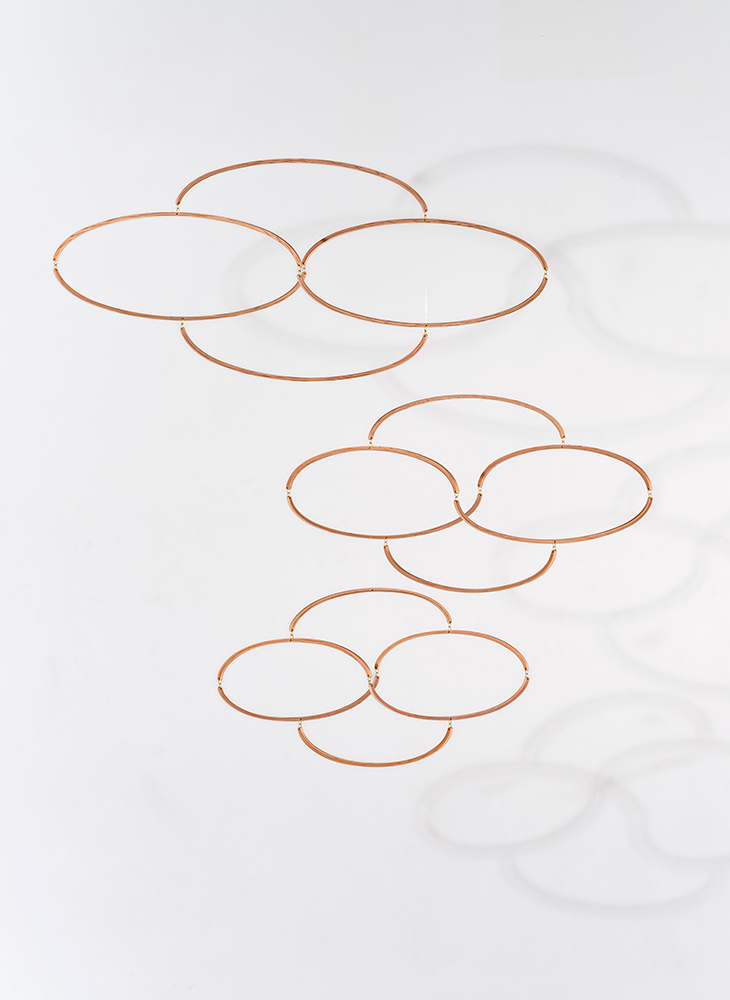
Inspired by large clouds drifting gently across the sky while constantly changing their appearance, this mobile is based on a traditional balance form, featuring a unique structure in which a second, inverted balance hangs beneath the primary one. As it catches the air, parts of the mobile rotate independently, allowing the overall composition to shift gradually in an elegant, continuous movement. The cloud outlines, each drawn with the fluidity of a single continuous line, recall the distinctive visual language of Japanese ukiyo-e prints.
The precisely bent cedar components float with lightness and grace, releasing a subtle wood fragrance that subtly permeates the space as the mobile turns. Responding to the faintest of air currents and human movements, it leisurely alters its expression—a sculptural object that evokes the vast and quiet rhythms of nature.
Moku
By Imagebook
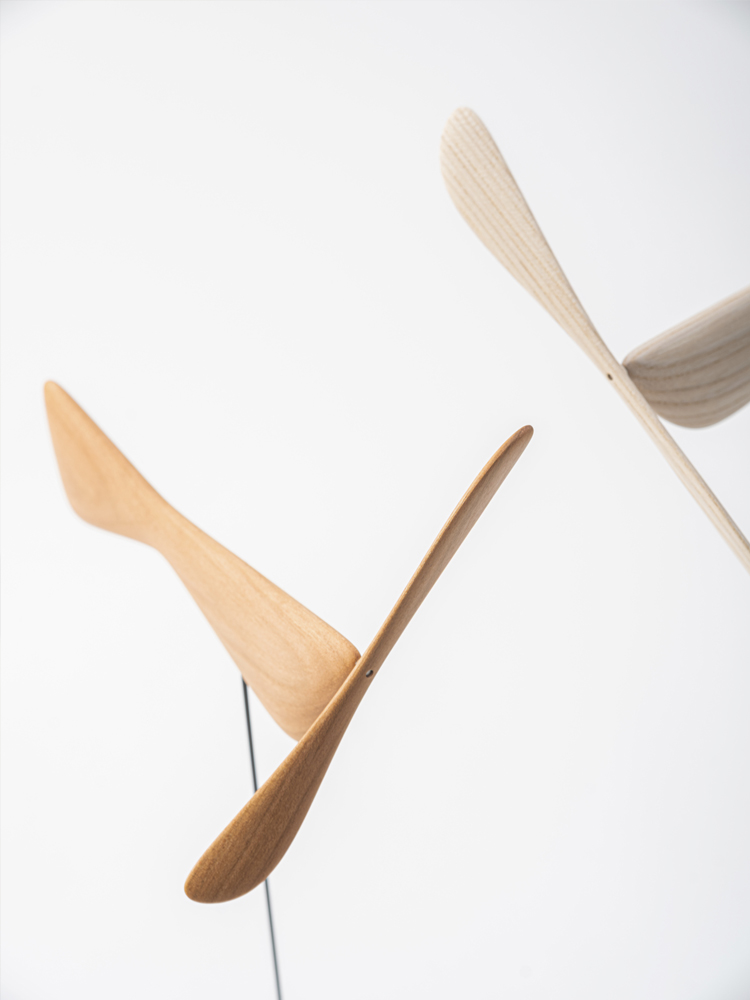
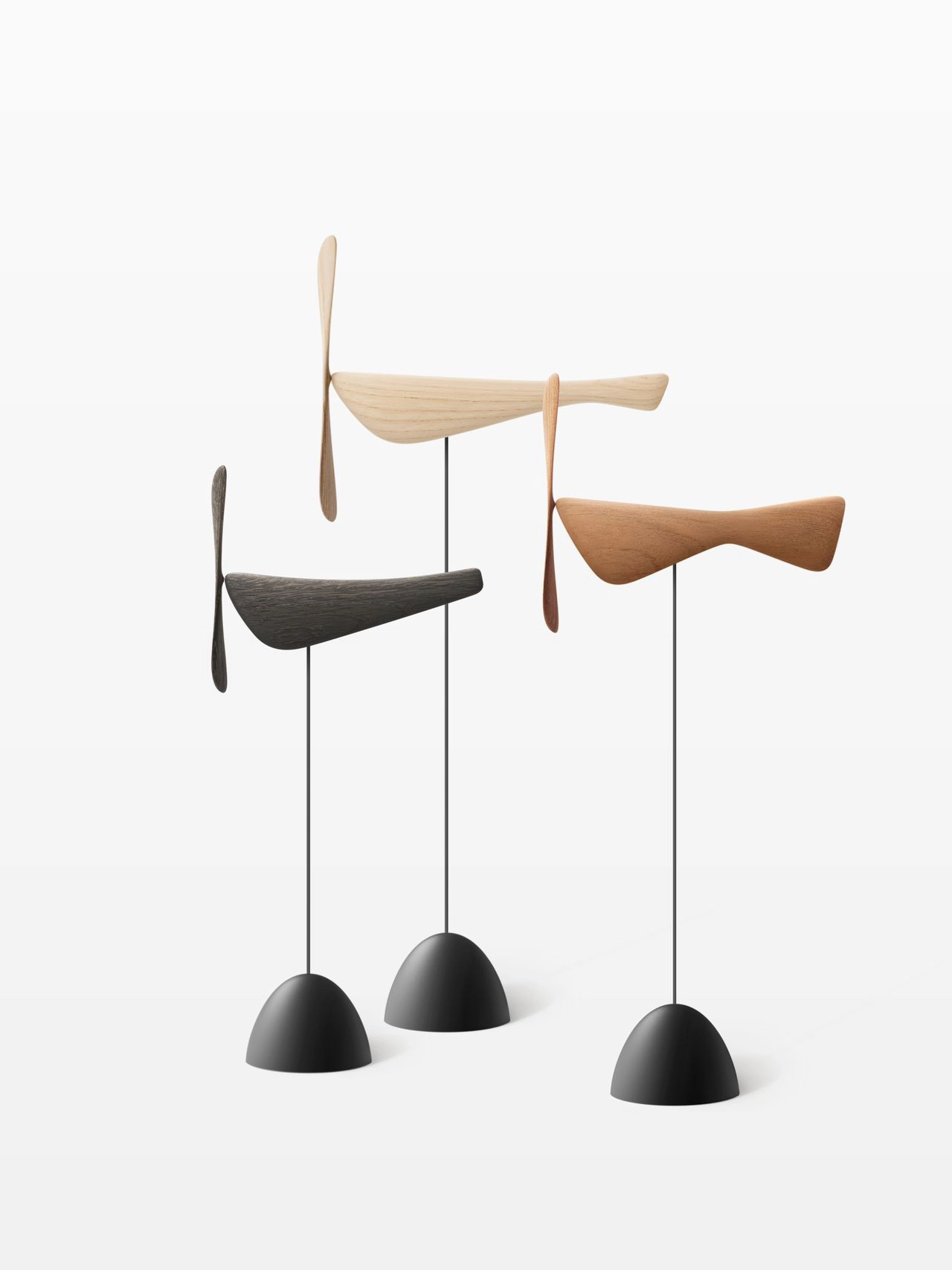
Wooden fish swimming in the sky… Normally, they float quietly in place, but when touched by a breeze, their propellers begin to turn gently, bringing a mood of calm and grace into daily life. Every piece of wood—from large furniture to small offcuts that might be discarded—originates from a single tree that grew over many years. To honor this gift from nature, we initiated a project to give new life to the offcuts produced during the making of our own wooden furniture.
The wooden elements of Moku are crafted from domestic ash, Japanese cherry, and oak offcuts. Each piece is carefully hand-sanded to reveal the beauty of the grain and finished with a natural finish that enhances the wood’s subtle hues and textures. The brass-cast base is hand-lacquered with urushi.
Imagebook
Imagebook is a creative journey that originated with Iwasaki Design Studio in Tokyo, guided by curiosity and a spirit of adventure. It unfolds gradually, taking form bit by bit as it follows the interests of each moment.
Tokio
by OEO Studio
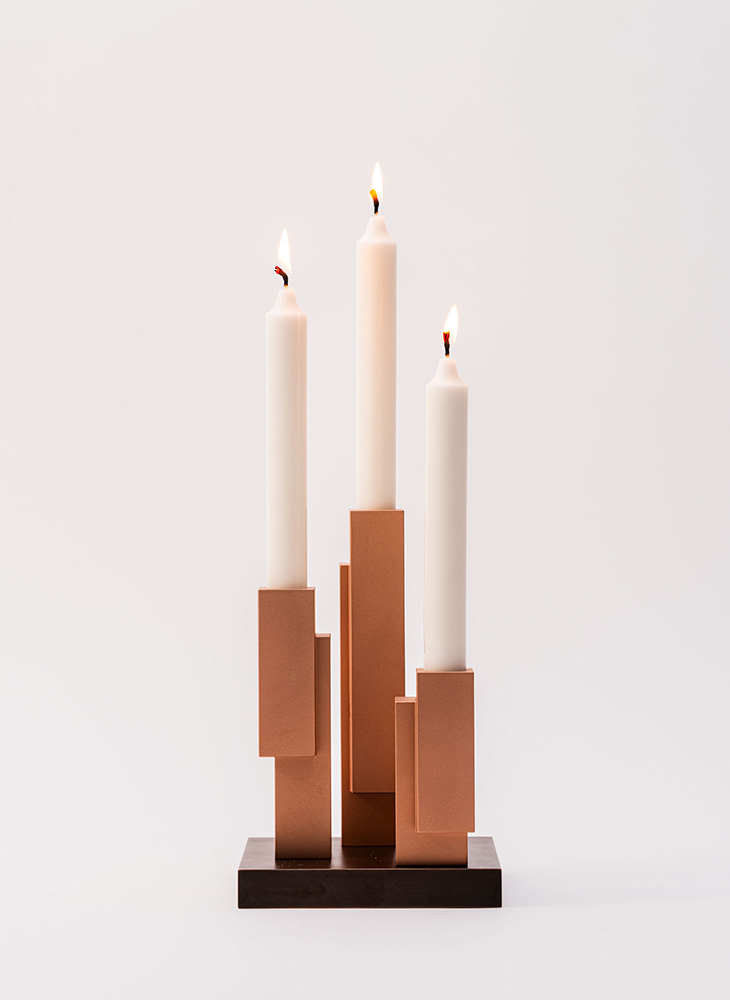
The Tokio candle stand consists of a small series of objects inspired by the architecture and cityscape of Tokyo. Tokio plays with architectural references and the relationship between structures and space. A single material, treated with different finishes, transforms each surface from subtle satin to mirror polish, resembling the reflective surfaces of the city. The pieces are cast by master craftspeople in the Toyama region using the lost-wax technique to create perfectly crafted forms.
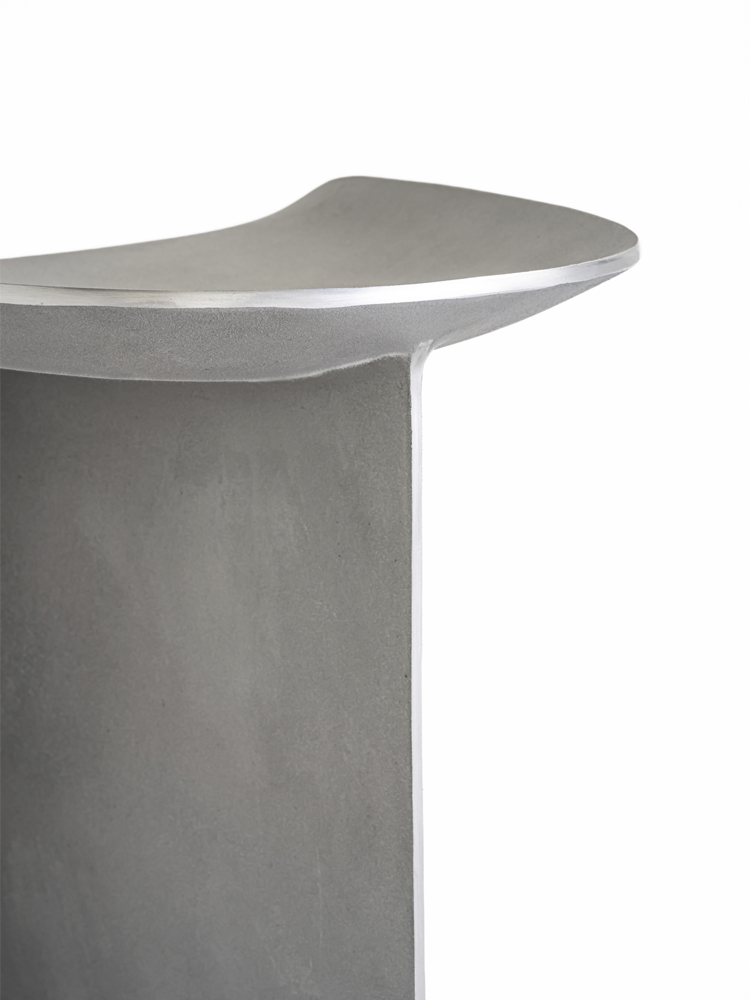
Nagare stool
By OEO Studio
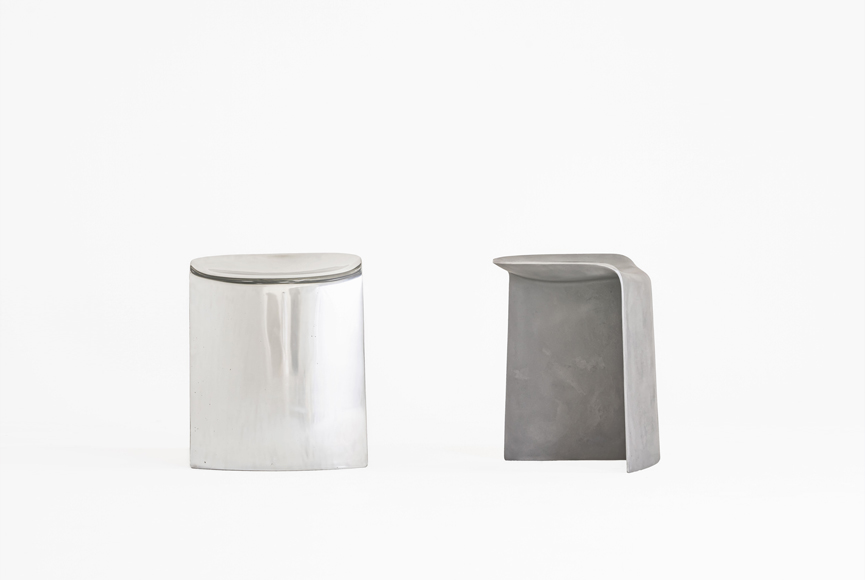
Nagare, a Japanese word meaning “flow” or “stream,” connotes a state of effortless, focused action. This design embraces fluidity, allowing form to emerge from the interaction of the material with physical forces rather than through imposed constraints, so that both form and material reveal their natural authenticity.
Crafted in Toyama Prefecture, each piece is meticulously cast as a single shape by master artisans whose lineage spans centuries. Having long dedicated their expertise to casting Buddhist statuary and bells for temples and shrines, they bring the same reverence and precision to this work.
Tama
By OEO Studio
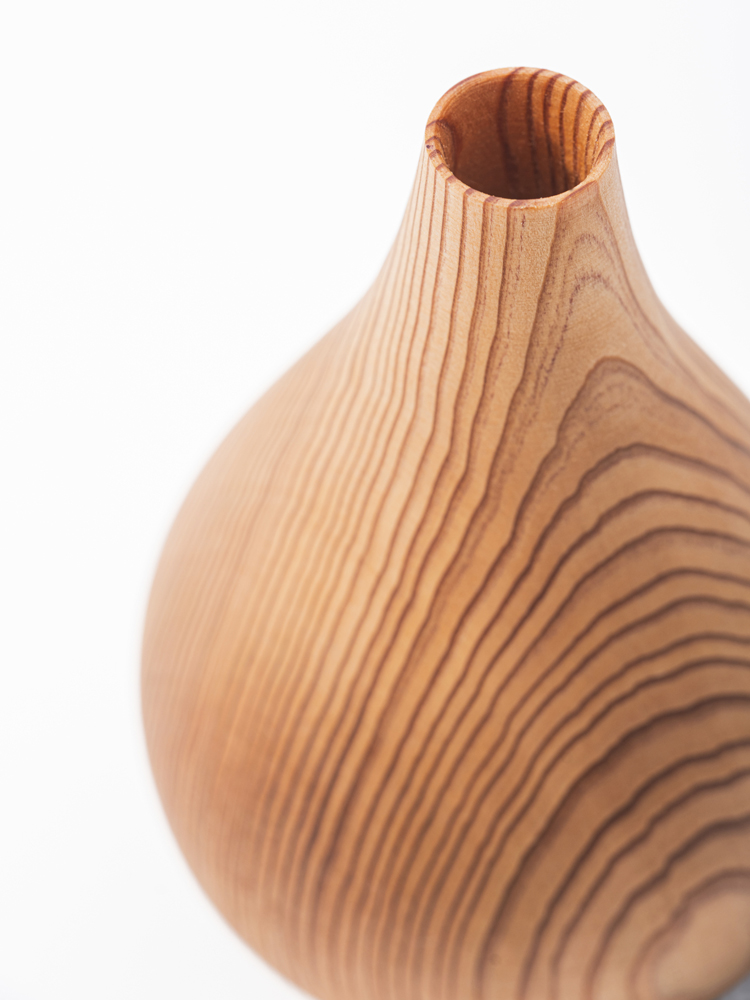
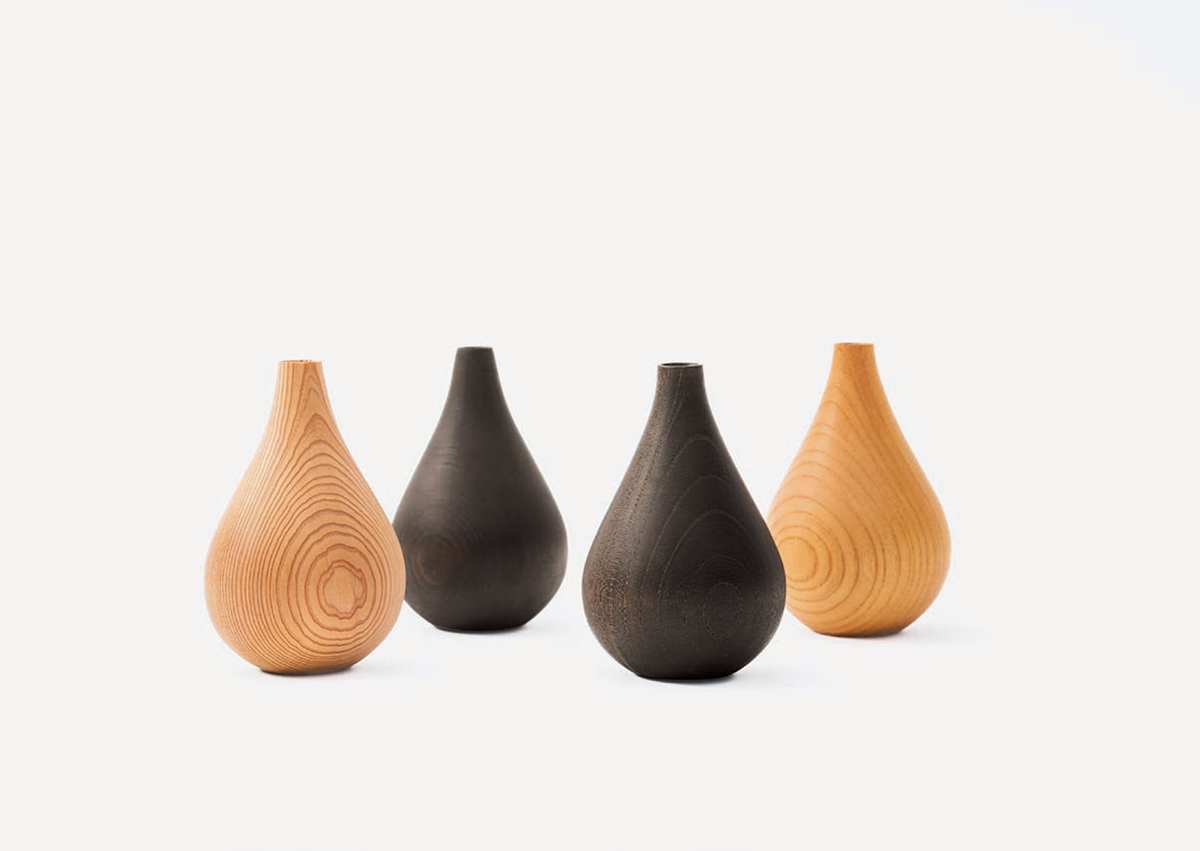
The name Tama means pearl or gem—something round and precious.
The design of the Tama vase is compellingly minimal, yet sophisticated in its use of material and artisanal design. Soft and evocative, it hints at a connection to the pearl-like prayer beads of Buddhist monks, and to the spirit of the forest.
Designed to celebrate the exquisite grain of Yoshino cedar and the delicate wood scent it adds to the air, Tama is an object to admire in its own right but is at its most sublime when paired with a flower.
Kitsutsuki
By OEO Studio
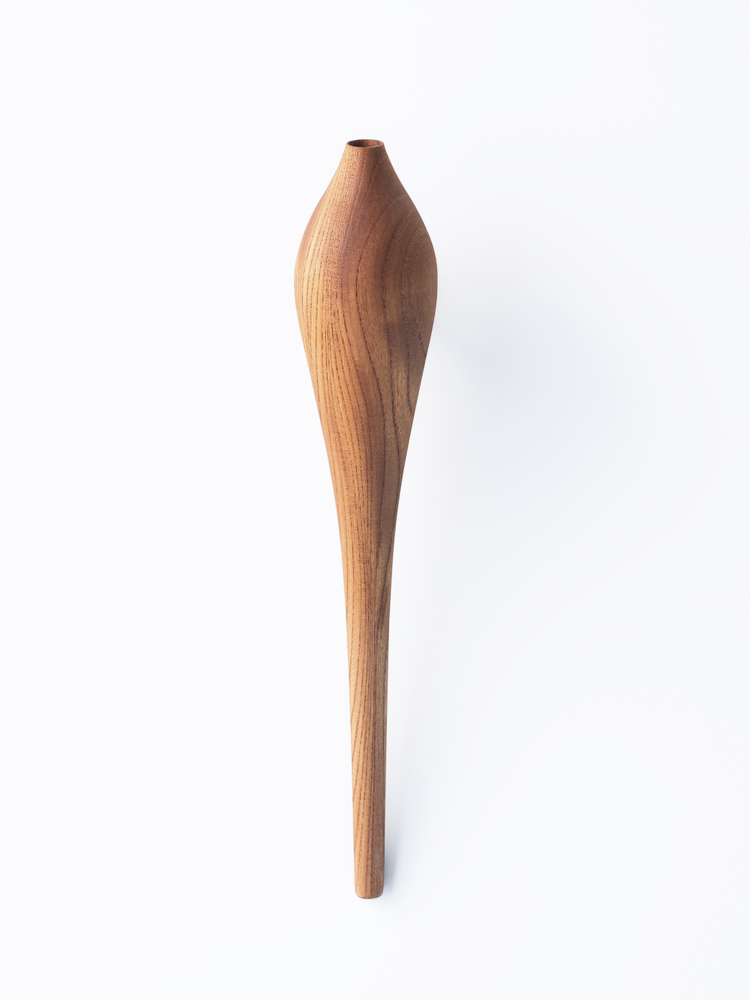
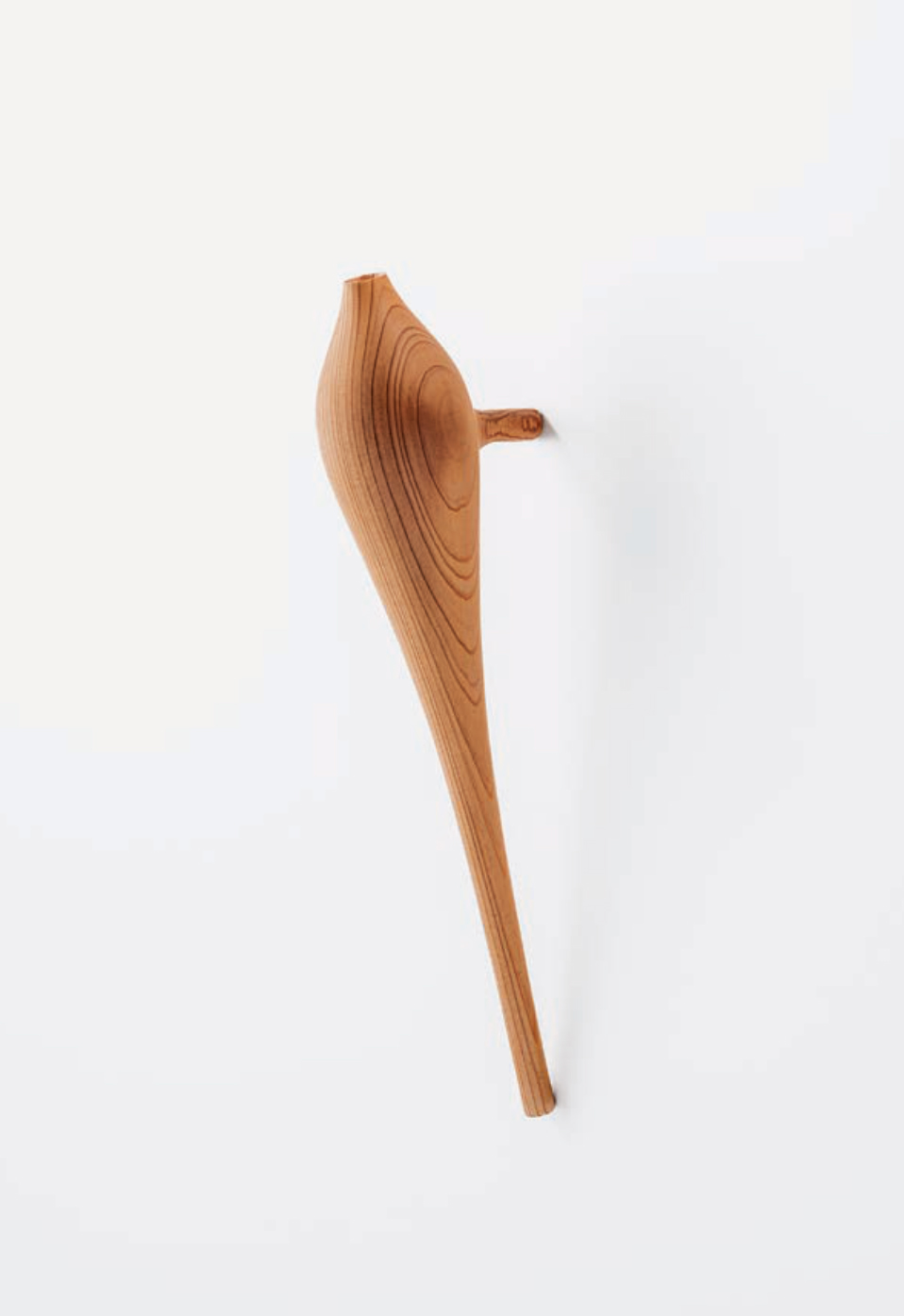
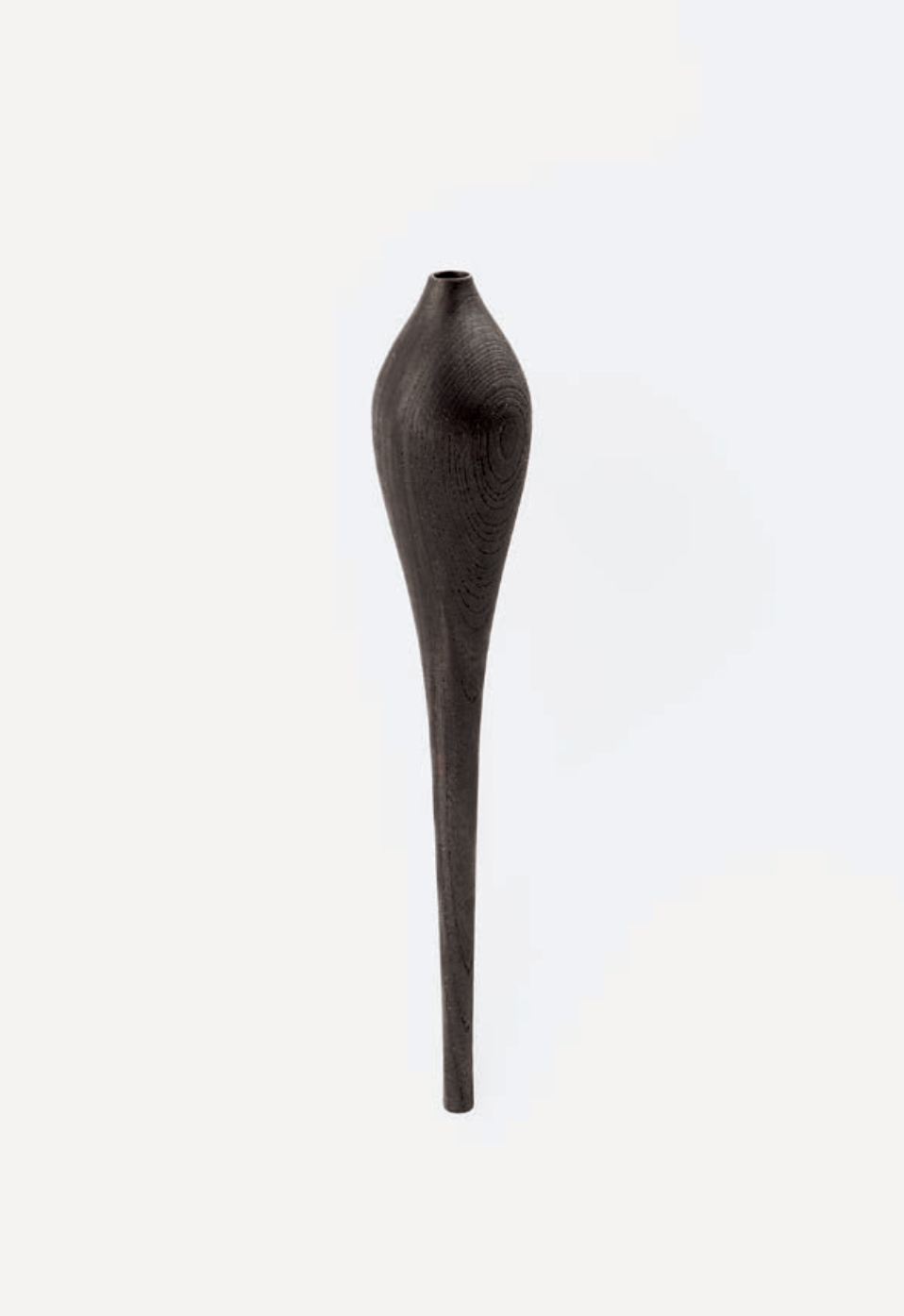
Kitsutsuki takes reference and inspiration from classical Japanese tradition for wall-hung vases. The name Kitsutsuki means woodpecker in Japanese and carries emotional resonance with the forest and the design of the Kitsutsuki vase. Turned and cut from a single piece of wood, in Yoshino cedar or Zelkova. The design is soft and tactile, emphasizing materiality and the form of the object, gently displaying and composing a flower or a branch.
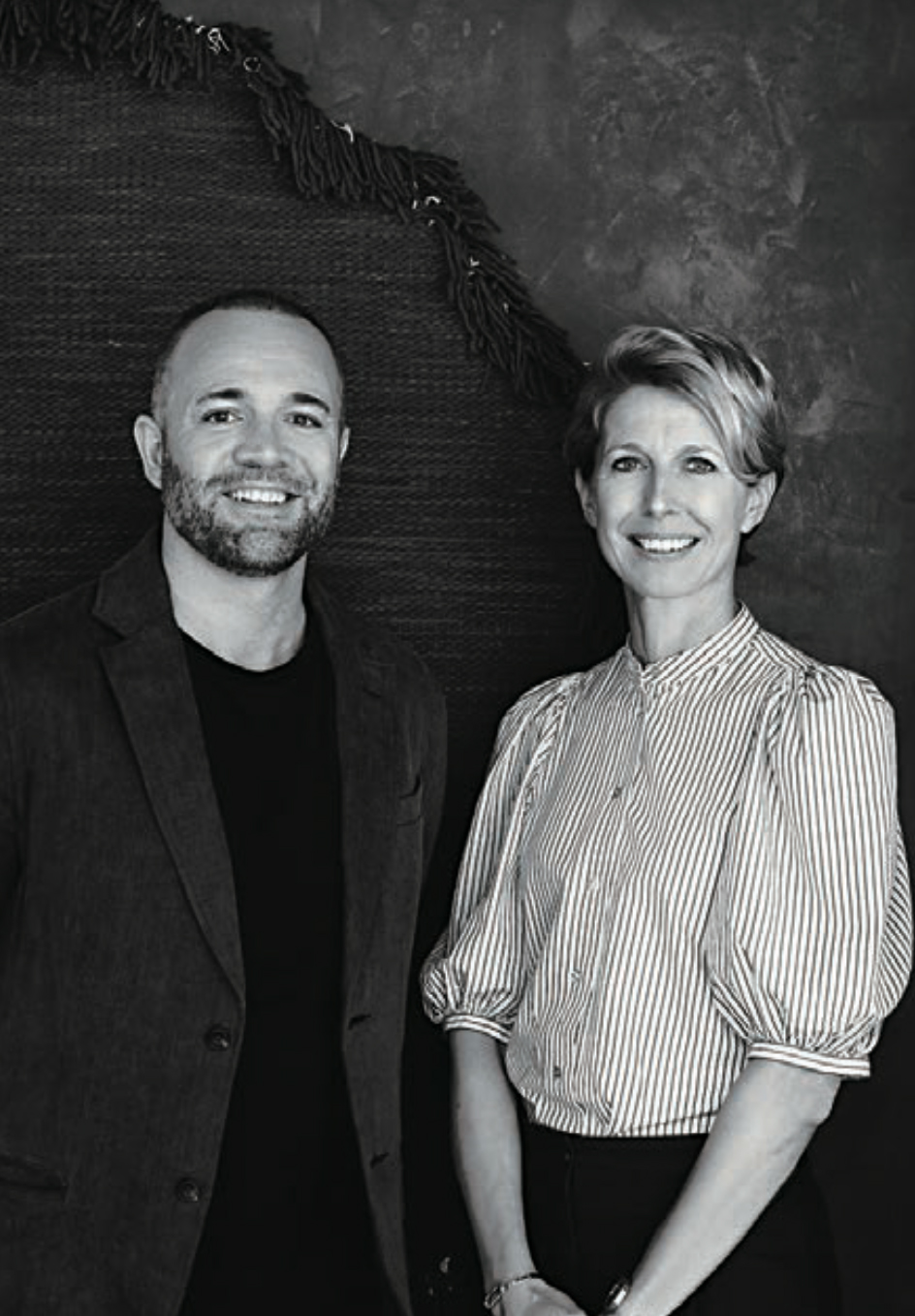
OEO Studio
Founded in 2003 by Thomas Lykke and Anne-Marie Buemann, OEO Studio is an internationally renowned multidisciplinary studio that works across architecture, interiors, product and brand design, with a reputation for thoughtfulness, attention to detail, and outstanding craftsmanship. Their studio in Copenhagen and their project office in Tokyo create locally rooted environments and experiences that infuse a Danish heritage with an Asian aesthetic. Following a philosophy of “Compelling Minimalism,” OEO Studio’s principles are based on extensive research, leading to purposeful designs that celebrate rich materials and textures to create memorable, timeless experiences.